There is something special about fresh homemade pasta. The texture is silkier. The taste is richer. And the process is surprisingly fun. However, getting started can feel overwhelming if you do not know which tool to choose. The good news is that finding the right beginner pasta roller does not have to be complicated. This guide will walk you through everything you need to know.
Why Homemade Pasta Is Worth the Effort
Many people assume making pasta at home takes hours of hard work. In reality, it takes about 30 minutes once you get used to it. Fresh pasta cooks faster than dried pasta. It also holds sauces better. Therefore, the results you get at home often beat what you find in stores.
Beyond the taste, making pasta is a relaxing activity. It connects you to a long tradition of home cooking. Many beginners discover it quickly becomes a weekend ritual they look forward to every week.
What to Look for in a Pasta Machine
Before buying, it helps to understand a few key features. Not all pasta machines work the same way. Choosing wisely from the start saves you time, money, and frustration.
Thickness Settings
A good pasta machine should offer multiple thickness settings. Most models range from 1 to 9. Thinner settings work well for delicate pasta like angel hair or lasagna sheets. Thicker settings suit heartier shapes like fettuccine. Look for a machine with at least six thickness options to give yourself flexibility.
Build Quality
Pasta machines take a beating. You will be pressing stiff dough through metal rollers repeatedly. Therefore, the build quality matters a great deal. Stainless steel or chrome-plated steel machines last longer and are easier to clean. Avoid machines made mostly of plastic, especially for the rollers.
Ease of Use
For anyone choosing an easy pasta maker, the setup process should be simple. The machine should clamp securely to your counter. The handle should turn smoothly. Some models also come with attachments for cutting different pasta shapes, which is a nice bonus for beginners.
Cleaning and Maintenance
Most pasta machines cannot go in the dishwasher. You clean them by brushing away dried dough. A machine with fewer hard-to-reach crevices will save you a lot of time after cooking. Simple designs are almost always easier to maintain.
Top Pasta Machine Picks for Beginners
Here are some of the most popular and highly rated options for people just starting out.
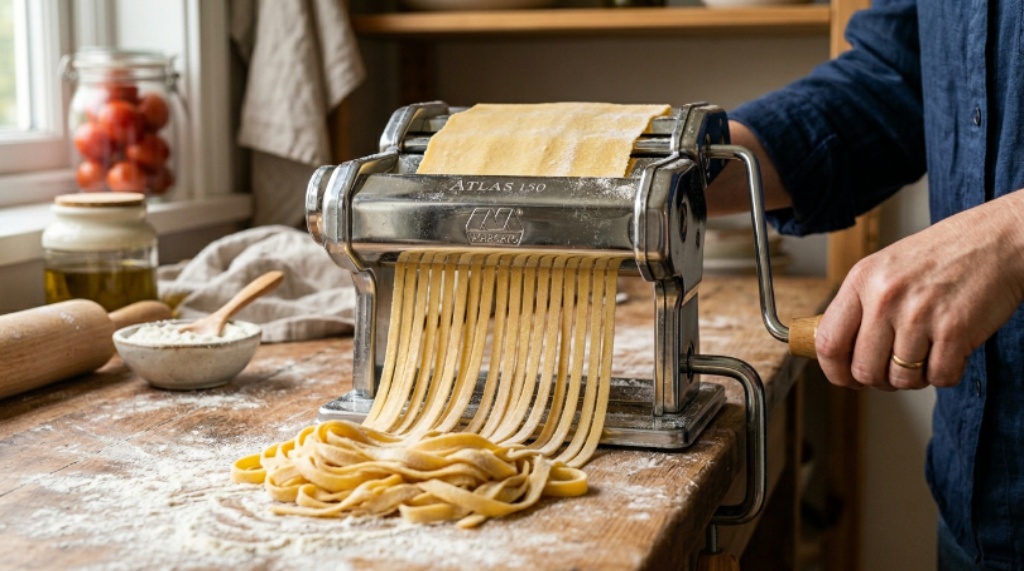
Marcato Atlas 150
The Marcato Atlas 150 is one of the most trusted names in home pasta making. It is made in Italy from chrome-plated steel. The machine offers 10 thickness settings, which gives you a wide range of options. It also comes with attachments for cutting fettuccine and tagliolini. Many beginners choose this model because it is durable and easy to use right out of the box.
Imperia Pasta Machine
Imperia is another Italian brand with a long history. The build quality is solid, and the rollers produce smooth, even sheets of pasta. It is slightly heavier than some competitors, which actually helps keep it stable on the counter. Additionally, Imperia machines are widely available and come at a reasonable price point for the quality offered.
KitchenAid Pasta Roller Attachment
If you already own a KitchenAid stand mixer, the pasta roller attachment is a smart investment. It turns your existing machine into a hands-free pasta maker. You feed the dough in, and the mixer does the rolling. This option is especially popular among home cooks who want convenience without buying a separate appliance. However, it does cost more than a standalone manual machine.
Philips Pasta and Noodle Maker
For those who want a fully electric option, the Philips Pasta and Noodle Maker is worth considering. You add your ingredients, press a button, and the machine mixes and extrudes the dough for you. It is the most beginner-friendly option on this list. The tradeoff is that it costs more and takes up more counter space. Still, it makes fresh pasta accessible even for those with no prior experience.
CucinaPro Pasta Machine
The CucinaPro is a budget-friendly choice that performs surprisingly well. It is a great starting point if you are not yet sure how much you will use a pasta machine. The build is not as premium as Marcato or Imperia, but it handles basic pasta shapes well. Therefore, it makes a solid entry point before upgrading later.
Tips for Getting Started With Your Pasta Machine
Owning a pasta machine is just the first step. Using it well takes a little practice. Here are a few tips to help you get better results from day one.
Start with the right dough. A basic pasta dough uses only flour and eggs. Use 00 flour if you can find it, as it produces a smoother texture. Additionally, let your dough rest for at least 30 minutes before rolling. Resting allows the gluten to relax, which makes rolling much easier.
Always start at the thickest setting. Run the dough through the thickest setting two or three times before moving to thinner settings. This process, called laminating, improves the texture of your final pasta.
Flour your dough lightly as you roll. Too much flour makes the pasta dry and brittle. Too little causes it to stick to the rollers. A light dusting at each pass is all you need.
Work in small batches. Beginners often try to roll too much dough at once. Smaller pieces are easier to handle and produce more consistent results.
Manual vs. Electric Pasta Machines
One of the first choices you will face is whether to buy a manual or electric machine. Both have clear advantages.
Manual machines are more affordable and more widely available. They also give you greater control over the thickness and texture of your pasta. Many experienced pasta makers prefer manual machines because they feel more connected to the process. However, they do require physical effort, which some people find tiring after a few batches.
Electric machines remove most of the effort. They are faster and more consistent. They are also a better choice for people with limited hand strength or mobility. The downside is the higher cost and the additional cleaning that comes with more complex parts.
For most beginners, a manual machine is the better starting point. It is more affordable, easier to learn on, and widely recommended by cooking enthusiasts.
How to Care for Your Pasta Machine
A well-maintained pasta machine can last for decades. The key is to clean it after every use. Never submerge a pasta machine in water. Instead, allow any remaining dough to dry completely. Then use a stiff brush to remove dried dough from the rollers and cutters.
Store your machine in a dry place away from moisture. Some models come with a cover or case, which helps prevent dust buildup. Additionally, lightly oil the rollers occasionally if your machine starts to feel stiff or squeaky. A small amount of food-safe oil on a cloth works well.
Conclusion
Getting into homemade pasta is one of the most rewarding steps a home cook can take. The right easy pasta maker makes the experience enjoyable from the very beginning. Whether you choose a classic Italian manual machine like the Marcato Atlas or an electric option like the Philips model, the most important thing is to start.
Look for a machine with good build quality, multiple thickness settings, and a manageable cleaning process. Start simple, practice your dough technique, and do not be afraid to experiment with different pasta shapes. With a little patience, fresh homemade pasta will become a regular part of your kitchen routine.
The best beginner pasta roller is ultimately the one that fits your budget, your kitchen space, and your cooking style. Choose wisely, and you will enjoy fresh pasta for many years to come.
Frequently Asked Questions
What is the best pasta machine for an absolute beginner?
The Marcato Atlas 150 is widely considered the best starting point. It is durable, easy to use, and produces excellent results. The Philips electric model is also a great choice if you prefer a fully automated process.
Do I need special flour to make fresh pasta?
00 flour is ideal because it is finely milled and produces a smoother dough. However, you can also use all-purpose flour with good results. The most important thing is to use the right flour-to-egg ratio for your recipe.
How long does it take to make fresh pasta from scratch?
The entire process, including mixing, resting, and rolling the dough, takes about 45 to 60 minutes. With practice, you can cut that time down to around 30 minutes. Fresh pasta also cooks much faster than dried, usually in just 2 to 3 minutes.
Can I make pasta without a machine?
Yes, you can roll pasta dough by hand using a rolling pin. However, it is much harder to achieve a consistent thickness by hand. A pasta machine makes the process significantly easier and produces more even results, especially for beginners.
How do I store fresh pasta after making it?
You can cook fresh pasta immediately, or let it dry on a pasta rack for about 30 minutes and then refrigerate it for up to two days. You can also freeze fresh pasta for up to a month. Dust it lightly with flour before storing to prevent sticking.