Your sofa sees a lot of daily use. People sit, nap, snack, and spend hours on it every week. Over time, it collects dust, crumbs, pet hair, skin cells, and moisture from the air. This creates the perfect environment for bacteria and dust mites to thrive. A quick wipe or fluff of the cushions is simply not enough to keep it truly clean.
Deep cleaning your sofa is something many households put off for too long. However, doing it regularly makes a noticeable difference. It improves air quality, extends the life of your sofa, and creates a healthier living space. The right vacuum cleaner is your most important tool for the job. This guide will show you exactly how to use it.
Why Your Fabric Sofa Needs More Than a Surface Clean
Fabric sofas are highly porous. This means they absorb everything they come into contact with, including sweat, food particles, pet dander, and airborne pollutants. These substances settle deep into the fibers over time. A standard brush or damp cloth only addresses what is on the surface.
Dust mites are one of the biggest hidden problems inside fabric furniture. These microscopic creatures feed on dead skin cells and thrive in warm, humid environments. They are too small to see with the naked eye. However, their presence can trigger allergies, worsen asthma, and cause skin irritation. Therefore, removing them requires more than just a visual clean.
Additionally, fabric sofas trap odors. Pet smells, cooking aromas, and general household odors embed themselves in the fibers. Regular vacuuming pulls these particles out before they settle permanently. This keeps your sofa smelling fresh without the need for chemical sprays.
Choosing the Right Vacuum Cleaner for Sofa Cleaning
Not all vacuum cleaners are suitable for fabric upholstery. Using the wrong type can flatten the fibers, miss embedded debris, or even damage the fabric. Therefore, understanding which features matter will help you make a better choice.
Suction Power and Adjustable Settings
Strong suction is essential for pulling debris out of dense fabric. However, too much power on delicate upholstery can stretch or distort the weave. Look for a vacuum with adjustable suction settings. This allows you to use higher power on heavy-duty areas and lower power on more delicate sections.
The Right Attachments Make All the Difference
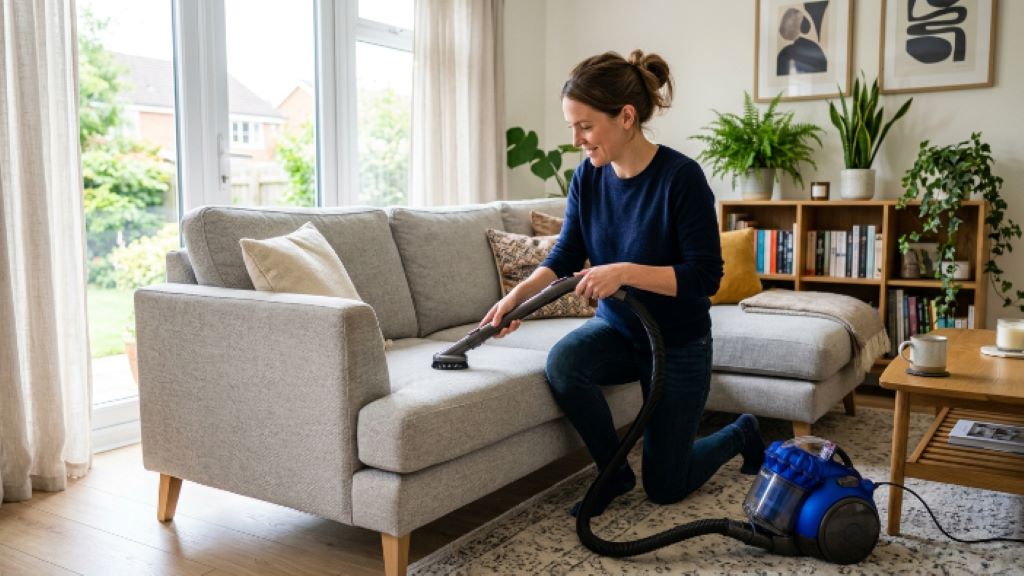
An upholstery attachment is the most useful tool for sofa cleaning. It is typically a wide, flat nozzle designed to glide smoothly across fabric surfaces. A crevice tool is equally important for reaching the gaps between cushions and along the base of the sofa. A soft-bristle brush attachment works well for loosening embedded debris before you vacuum it away.
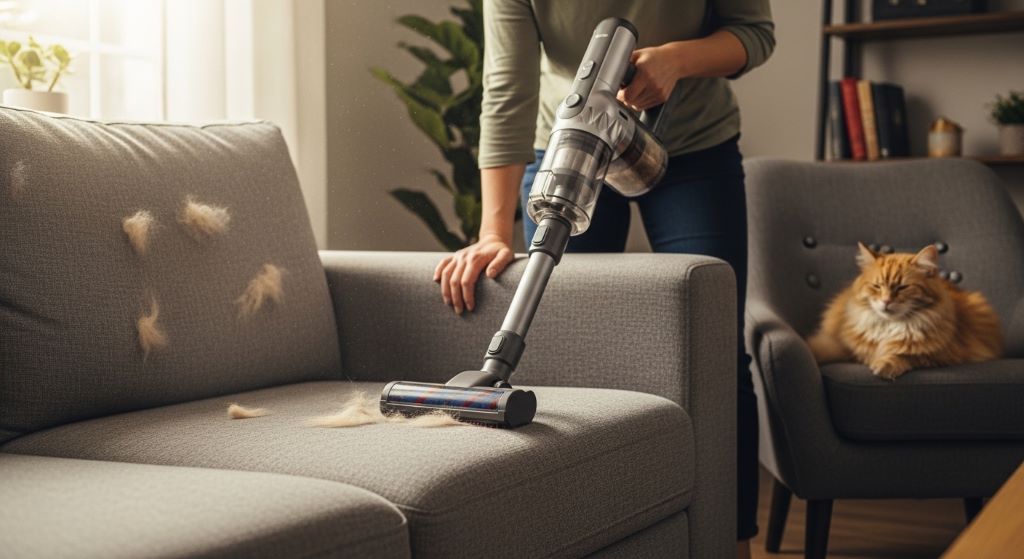
Additionally, if you have pets, a motorized pet hair attachment can be a great investment. These tools have rotating bristles that lift pet hair from fabric far more effectively than standard nozzles.
HEPA Filtration for Allergy Sufferers
If anyone in your household suffers from allergies or asthma, choose a vacuum with HEPA filtration. Standard filters can allow fine particles and allergens to pass back into the air during vacuuming. A HEPA filter traps these particles and prevents them from recirculating. This is especially important when dealing with dust mites and pet dander.
Corded vs. Cordless Vacuums
Cordless stick vacuums offer excellent convenience for sofa cleaning. They are lightweight and easy to maneuver around cushions and armrests. However, battery life can be a limitation on larger sofas. Corded models provide consistent, uninterrupted power throughout the entire cleaning session. For a thorough deep clean, a corded upright or canister vacuum with dedicated attachments is often the more reliable choice.
Step-by-Step Guide to Deep Cleaning Your Fabric Sofa
Follow these steps in order for the most effective results. Skipping steps will reduce the overall outcome, so take your time with each one.
Step 1: Check the Care Label
Before you start, locate the care label on your sofa. It is usually found under a cushion or along the base. The label will include cleaning codes. W means water-based cleaners are safe. S means solvent-based cleaners only. WS means either is acceptable. X means vacuum only. Always follow these codes to avoid damaging your sofa.
Step 2: Remove and Beat the Cushions
Take all cushions off the sofa and take them outside if possible. Give each one a firm shake or beat them against a hard surface. This loosens embedded debris and makes the vacuuming step more effective. While the cushions are off, you will also get a clear view of the sofa base, which often hides a surprising amount of dirt and crumbs.
Step 3: Use a Soft Brush to Loosen Debris
Before vacuuming, use a soft-bristle brush or a dry sponge to gently agitate the fabric surface. Work in small circular motions. This brings trapped particles closer to the surface where the vacuum can reach them more easily. Pay extra attention to areas where people sit most often, as these spots accumulate the most debris.
Step 4: Vacuum Thoroughly with the Upholstery Attachment
Attach the upholstery nozzle to your vacuum cleaner. Start at the top of the sofa back and work your way down in slow, overlapping strokes. Slow passes allow the vacuum to draw out more embedded particles compared to fast sweeping motions. Cover the entire surface of each cushion, both front and back.
Switch to the crevice tool for the seams, gaps, and base of the sofa. These areas tend to collect the most crumbs and debris. Additionally, run the crevice tool along the bottom edge where the sofa meets the floor.
Step 5: Target Stains with an Appropriate Cleaner
Once you have finished vacuuming, address any visible stains. Always test your cleaner on a hidden area of the sofa first. Apply a small amount and wait a few minutes to check for discoloration or damage. If it is safe, apply the cleaner to the stained area and blot gently with a clean cloth. Never rub a stain, as this pushes it deeper into the fabric and spreads it further.
Step 6: Deodorize with Baking Soda
Baking soda is a natural and effective deodorizer. Sprinkle a generous amount over the entire sofa surface. Let it sit for at least 20 to 30 minutes. For stronger odors, leave it for up to an hour. The baking soda absorbs moisture, neutralizes odors, and helps lift remaining surface particles. Afterward, vacuum the sofa again to remove all the baking soda residue.
Step 7: Allow the Sofa to Dry Fully
If you used any liquid cleaner, allow the sofa to dry completely before replacing the cushions or using it again. Open windows or run a fan to speed up the process. Sitting on a damp sofa can flatten the fabric and create conditions for mold or mildew to develop. Therefore, patience at this stage protects your sofa long term.
How Often Should You Deep Clean Your Sofa?
The frequency depends on how the sofa is used. For households with pets or young children, a thorough deep cleaning sofa session every one to two months is a reasonable target. For households without pets or allergies, once every three months is generally sufficient.
However, regular light vacuuming should happen much more frequently. A quick once-over with the upholstery attachment once a week helps prevent buildup and reduces the time needed for deep cleans. Think of weekly vacuuming as maintenance and monthly deep cleaning as a reset.
Additional Tips for Keeping Your Sofa Cleaner for Longer
Prevention is always easier than cleaning. Here are some practical habits that will keep your sofa fresher between deep cleans:
- Use a washable sofa cover or throw blanket on the most heavily used areas. This creates a barrier between the fabric and everyday contact.
- Remove shoes before sitting on the sofa. Shoes carry in dirt, bacteria, and outdoor allergens that transfer directly to the fabric.
- Keep food and drinks at a table whenever possible. Spills and crumbs are the leading cause of sofa staining and odor.
- Rotate and flip cushions regularly. This distributes wear evenly and exposes different surfaces to airflow.
- Run an air purifier near the sofa. This reduces the number of airborne particles that settle onto the fabric between cleans.
Additionally, consider using a fabric protector spray after a deep clean. These sprays create an invisible barrier that repels liquids and makes future cleaning easier.
Conclusion
A fabric sofa is one of the most used pieces of furniture in any home. It deserves regular, thorough care to stay clean, fresh, and long-lasting. The right vacuum cleaner, equipped with the proper attachments and filtration, is your single most powerful tool for the job.
By following a clear step-by-step process, from removing cushions and loosening debris to slow, careful vacuuming and deodorizing with baking soda, you can achieve a genuinely deep clean. Addressing dust mites and hidden allergens is not just about appearance. It is about creating a healthier environment for everyone in your home.
Therefore, invest in a quality vacuum with upholstery attachments and HEPA filtration. Build a regular cleaning routine. Your sofa, and your health, will thank you for it.
Frequently Asked Questions
1. Can I use a regular vacuum cleaner on a fabric sofa?
Yes, but it works best when used with the right attachments. A standard floor nozzle is not designed for upholstery and may not reach into seams or crevices. Use an upholstery nozzle and a crevice tool for the best results. Additionally, make sure your vacuum has adjustable suction to avoid damaging delicate fabric.
2. How do I know if my sofa has dust mites?
You cannot see dust mites without a microscope. However, signs of their presence include unexplained allergy symptoms such as sneezing, itchy eyes, or a runny nose when sitting on the sofa. Regular vacuuming with a HEPA-filter vacuum is the most effective way to reduce their population significantly.
3. Is baking soda safe to use on all fabric sofas?
Baking soda is generally safe for most fabric upholstery. However, always check the care label first. If your sofa is labeled S for solvent-only cleaning, avoid introducing any moisture-absorbing powders that could later be activated by humidity. For W or WS-coded sofas, baking soda is an excellent natural deodorizer.
4. How long does it take to deep clean a fabric sofa?
A thorough deep cleaning sofa session typically takes between one and two hours, depending on the size of the sofa and how heavily it has been used. This includes time for brushing, vacuuming, stain treatment, and the baking soda deodorizing step. Drying time after any liquid cleaning adds additional time on top of that.
5. What is the best vacuum cleaner brand for sofa cleaning?
Several brands consistently perform well for upholstery cleaning, including Dyson, Miele, Shark, and Bissell. Look for models that include dedicated upholstery attachments and HEPA filtration. The best choice depends on your budget, sofa fabric type, and whether you have pets. Reading verified customer reviews focused on upholstery use will give you the most practical guidance.
Related Topics:
How to clean solar panels in the UK?