Why Your Vacuum Choice Matters for Tile Floors
Tile floors look beautiful. They are durable, easy to clean, and great for warm climates. However, not every vacuum cleaner is safe to use on them. The wrong machine can scratch the tile surface or chip away at the grout between tiles. Over time, this damage adds up. It can lead to costly repairs or full floor replacements.
Therefore, choosing the right vacuum is not just about suction power. It is about protecting your investment. This guide will walk you through everything you need to know. By the end, you will feel confident picking a vacuum that cleans well and keeps your floors looking new.
Understanding the Risks: What Can Damage Tile and Grout
Before you shop, it helps to understand what causes damage in the first place. Many people assume any vacuum will do the job. That is not always true.
Hard plastic wheels can leave small scratches on polished tiles. Stiff rotating brushes can grind grit into grout lines instead of lifting it away. Heavy machines with narrow contact points put pressure on individual tiles, which can cause micro-cracks over time.
Additionally, beater bars — the spinning brushes found in many upright vacuums — are designed for carpet. On tile, they can scatter debris and push dirt deep into grout. This makes the floor harder to clean, not easier.
So, the first step is knowing what features to avoid. The second step is knowing what features to look for.
Key Features to Look for in a Vacuum for Tile Floors
Soft Rubber Wheels and Padded Bumpers
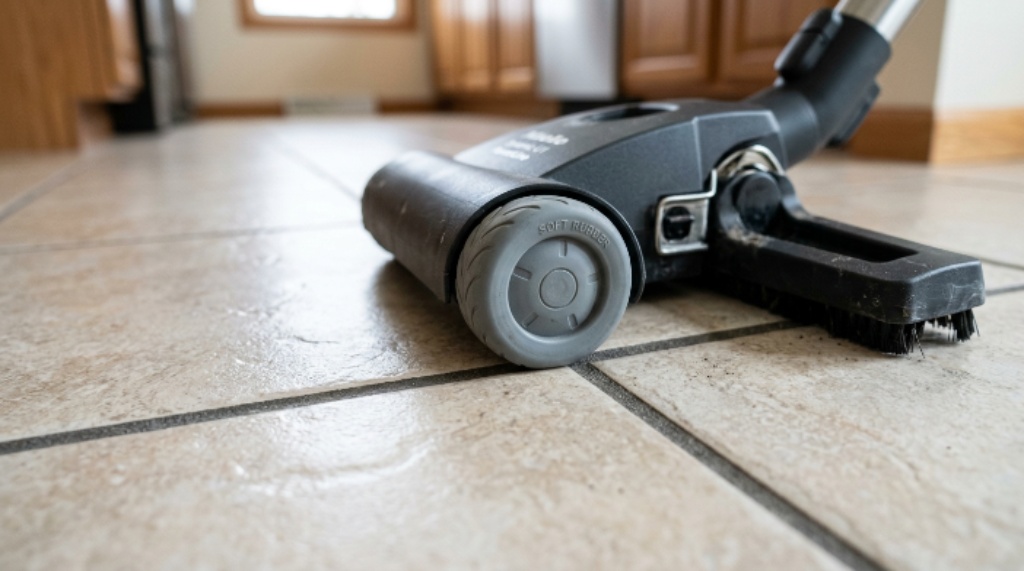
Wheels are the first point of contact between your vacuum and your floor. Look for machines with soft rubber wheels rather than hard plastic ones. Rubber wheels glide smoothly without leaving marks. Padded bumpers around the base also protect your baseboards and tile edges when the vacuum makes contact with walls or furniture.
Suction-Only or Hard Floor Mode
Many modern vacuums come with a hard floor mode. This turns off the rotating brush bar and relies only on suction. This is exactly what tile floors need. The suction lifts dirt and dust without spinning brushes pushing it around or grinding it into grout lines.
If a vacuum does not have a dedicated hard floor mode, look for one with a brush roll that can be switched off manually. This small feature makes a big difference.
Adjustable Suction Power
Strong suction is great, but too much suction on a lightweight area rug or a loose floor mat can be a problem. A vacuum with adjustable suction lets you match the power to the surface. For bare tile, moderate suction is usually enough to pick up dust, pet hair, and crumbs without dragging debris across the surface.
Flat, Wide Cleaning Head
A wide cleaning head covers more surface area in fewer passes. It also tends to sit flatter against the floor. This means the edges of the head are less likely to dig into grout lines. Look for a head with a low profile and a smooth underside.
Anti-Scratch Vacuum Design
An anti-scratch vacuum is specifically built with floor-safe materials and smooth contact points. These machines use soft bristles, felt strips, or rubber seals along the edge of the cleaning head. These materials pick up fine dust without scratching the tile glaze. When comparing models, check product descriptions for terms like “hard floor safe,” “scratch-free,” or “parquet-friendly.” These labels signal that the manufacturer had tile and hardwood floors in mind during the design process.
Types of Vacuums That Work Well on Tile
Canister Vacuums
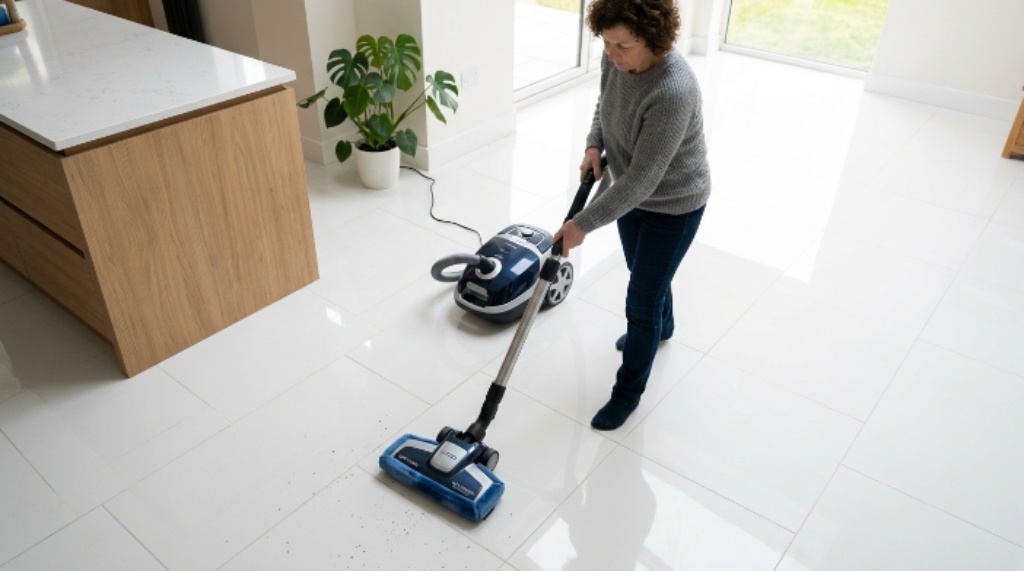
Canister vacuums are a popular choice for tile floors. The motor and dustbin sit in a separate unit that rolls behind you on soft wheels. The cleaning head is lightweight and easy to maneuver. Most canister models come with a dedicated hard floor attachment. This makes them one of the safest options for tile.
Stick Vacuums
Stick vacuums are lightweight and convenient. They are great for quick daily cleanups. Many newer models include a soft roller head designed specifically for hard floors. However, not all stick vacuums have enough suction for a thorough clean. Consider using one for daily maintenance and pairing it with a more powerful machine for weekly deep cleans.
Robot Vacuums
Robot vacuums have improved dramatically in recent years. Many now come with sensors that detect floor type and adjust their cleaning mode. They are excellent for keeping tile clean between manual vacuuming sessions. Look for models with rubber rollers rather than bristle brushes for the safest performance on tile.
Wet-Dry Vacuums
Wet-dry vacuums can handle both dry debris and liquid spills. They are especially useful in kitchens and bathrooms where tile is common and spills happen often. These machines typically have large, rubber-edged heads that are gentle on floors. However, they tend to be bulkier, so storage can be a concern.
Practical Tile Floor Cleaning Tips to Follow Every Time
Choosing the right vacuum is step one. Using it correctly is step two. These tile floor cleaning tips will help you get the best results while keeping your grout in great shape.
Start by removing large debris by hand or with a broom before vacuuming. Large pieces of food, rocks, or hard objects can scratch tile if dragged across the surface by a vacuum head.
Always vacuum in straight lines rather than random patterns. This prevents the cleaning head from crossing grout lines at sharp angles, which can wear them down over time.
Empty the dustbin regularly. A full bin reduces suction and causes the vacuum to work harder. When the machine strains, it can vibrate more against the floor, which increases the chance of minor scratches.
Clean the vacuum’s wheels and undercarriage every few weeks. Debris caught in the wheels can act like sandpaper on your tile surface. A quick wipe-down keeps things rolling smoothly.
Finally, use a microfiber mop after vacuuming to pick up any remaining fine dust. This two-step approach — vacuum then mop — is one of the most effective tile floor cleaning tips for maintaining grout color and tile shine over the long term.
How to Test a Vacuum Before You Buy
If possible, test a vacuum in the store or take advantage of return policies to try it at home. During your test, watch for these things:
- Does the cleaning head glide smoothly without catching on grout lines?
- Do the wheels leave any marks when rolled on a hard surface?
- Is the suction strong enough to pick up fine dust in one pass?
- Does the machine feel well-balanced and easy to push?
Reading verified customer reviews online is also helpful. Look for reviews from people who specifically used the vacuum on tile or hardwood. Their experiences will tell you more than a product description ever could.
Conclusion
Choosing the right vacuum for tile floors is about more than suction power. It comes down to design, materials, and features that protect your floors while cleaning them effectively. Look for an anti-scratch vacuum with soft rubber wheels, a hard floor mode, and a wide, flat cleaning head. Consider canister or stick models for everyday use, and supplement with a robot vacuum for hands-free maintenance. Follow basic tile floor cleaning tips like clearing large debris first, vacuuming in straight lines, and finishing with a microfiber mop. These simple habits will keep your tile and grout looking pristine for years to come.
Frequently Asked Questions
Can I use a regular carpet vacuum on tile floors?
You can, but it is not ideal. Carpet vacuums often have stiff beater bars and hard plastic wheels that can scratch tile or damage grout. If you must use one, switch off the brush roll and use only the suction mode.
How often should I vacuum tile floors?
High-traffic areas like kitchens and hallways benefit from vacuuming every one to two days. Low-traffic rooms can be done once or twice a week. Regular cleaning prevents grit buildup, which is the main cause of grout discoloration.
What is the best vacuum head attachment for tile?
A hard floor brush attachment with soft natural or nylon bristles is the safest choice. It glides across tile without scratching and picks up fine dust that suction alone might miss.
Will vacuuming damage grout over time?
It can, if you use the wrong vacuum or technique. Hard wheels, stiff brushes, and vacuuming at sharp angles across grout lines can all cause wear. Using a floor-safe machine and following proper technique greatly reduces this risk.
Is a robot vacuum safe for tile floors with grout?
Yes, most modern robot vacuums are safe for tile. Choose a model with rubber rollers rather than bristle brushes, and make sure it has sensors to navigate grout lines gently. They are great for daily light maintenance between deeper cleans.
Related Topics:
How to Find the Best Vacuum for Pet Hair Without Overpaying
How to Start House Cleaning Jobs Near You Step by Step