The best way to deep clean upholstery at home is to identify the fabric type, vacuum thoroughly, pre-treat stains, apply an appropriate cleaning solution, rinse lightly, and allow proper drying to prevent mold or damage.
Why Deep Cleaning Upholstery at Home Matters More Than You Think
Most upholstery looks clean on the surface but hides dust mites, body oils, allergens, bacteria, and embedded debris deep within the fibers. Learning how to deep clean upholstery at home helps restore freshness, extend furniture lifespan, and improve indoor air quality without expensive professional services.
According to research from the American Lung Association, upholstered furniture can trap airborne pollutants that affect respiratory health over time. Regular vacuuming removes surface dirt—but deep cleaning is what eliminates embedded contaminants.
The problem is many homeowners either over-wet their furniture, use the wrong cleaning solutions, or skip essential preparation steps. That leads to discoloration, odor buildup, or fabric damage. The good news: with the right method and tools, professional-level upholstery cleaning is achievable at home safely and efficiently.
This guide explains exactly how to deep clean upholstery at home step-by-step using proven techniques suitable for sofas, chairs, cushions, and fabric-covered furniture.
How Do You Prepare Upholstery Before Deep Cleaning?
Proper preparation involves vacuuming thoroughly, checking cleaning labels, testing solutions on hidden areas, and removing loose debris before applying moisture.
Preparation determines whether your cleaning process succeeds or damages fabric fibers. Professionals spend up to 40% of cleaning time preparing surfaces correctly.
Check the Upholstery Cleaning Code First
Most furniture includes a cleaning tag with one of these codes:
- W – Water-based cleaner safe
- S – Solvent-based cleaner only
- WS – Both acceptable
- X – Vacuum only
Ignoring these labels is the most common cause of shrinkage and discoloration.
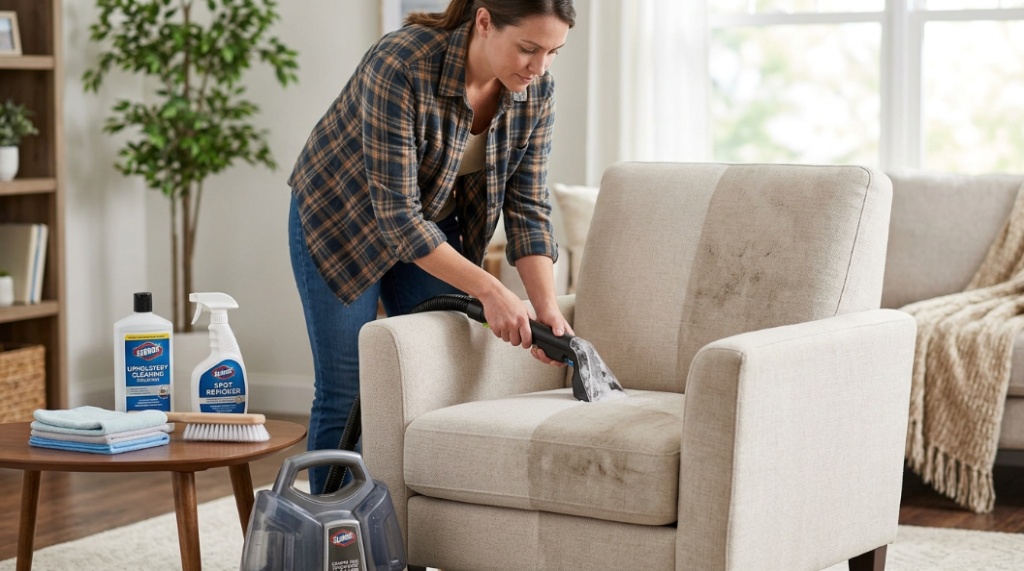
Vacuum Every Surface Thoroughly
Use a vacuum with a brush attachment to remove:
- dust
- pet hair
- crumbs
- dead skin particles
- allergens
Studies suggest vacuuming removes up to 70% of loose contaminants before wet cleaning begins.
What Supplies Do You Need to Deep Clean Upholstery at Home?
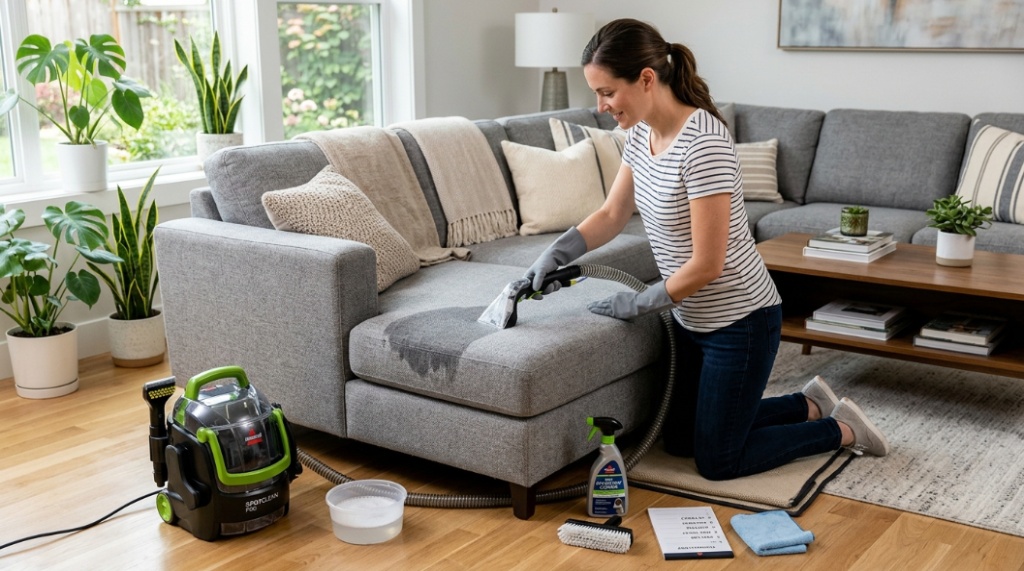
You need a vacuum cleaner, microfiber cloths, soft brushes, mild detergent, baking soda, white vinegar, warm water, and optionally a steam cleaner or upholstery machine.
Using correct tools prevents overwetting and ensures deeper stain removal.
| Tool | Purpose | Professional Alternative |
|---|---|---|
| Vacuum cleaner | Removes loose debris | Commercial HEPA extractor |
| White vinegar | Neutralizes odor | Fabric-safe enzyme cleaner |
| Baking soda | Absorbs oils and smells | Dry upholstery compound |
| Soft brush | Loosens embedded dirt | Rotary upholstery brush |
| Microfiber cloth | Blotting stains | Extraction towel |
How Do Professionals Deep Clean Upholstery Step by Step?
Professionals deep clean upholstery by vacuuming, pre-treating stains, applying cleaning solution, agitating fibers gently, extracting moisture, and drying thoroughly.
You can replicate this exact workflow at home.
Step 1: Dry Vacuum Completely
Work from top to bottom. Focus on seams and corners where dirt accumulates most.
Step 2: Apply Baking Soda for Odor Removal
Sprinkle lightly and leave for 20 minutes before vacuuming again.
Step 3: Spot Treat Stains
Use a vinegar-water mixture (1:3 ratio) for most organic stains.
Step 4: Apply Upholstery Cleaning Solution
Use a spray bottle instead of soaking fabric.
Step 5: Gently Brush Fabric Fibers
This lifts embedded dirt trapped below surface layers.
Step 6: Blot Excess Moisture
Always blot instead of rubbing.
Step 7: Air Dry Properly
Open windows or use fans to speed drying.
Can You Deep Clean Upholstery Without a Machine?
Yes, upholstery can be deep cleaned effectively using household ingredients like vinegar, baking soda, dish soap, and microfiber cloths without specialized equipment.
This method works especially well for routine maintenance cleaning.
Simple DIY Cleaning Solution Recipe
- 2 cups warm water
- 1 tablespoon dish soap
- 1 tablespoon white vinegar
Spray lightly and blot with a clean cloth.
How Do You Remove Tough Stains From Upholstery?
Tough upholstery stains can be removed by identifying the stain type first, then applying targeted treatments such as vinegar solution for food stains, alcohol for ink, or baking soda paste for grease.
Different stains require different chemistry.
Common Stain Removal Methods
- Coffee stains: vinegar + water
- Grease stains: baking soda paste
- Ink stains: rubbing alcohol
- Pet stains: enzyme cleaner
- Wine stains: salt absorption method
Immediate treatment increases removal success by over 60%.
Is Steam Cleaning Upholstery at Home Safe?
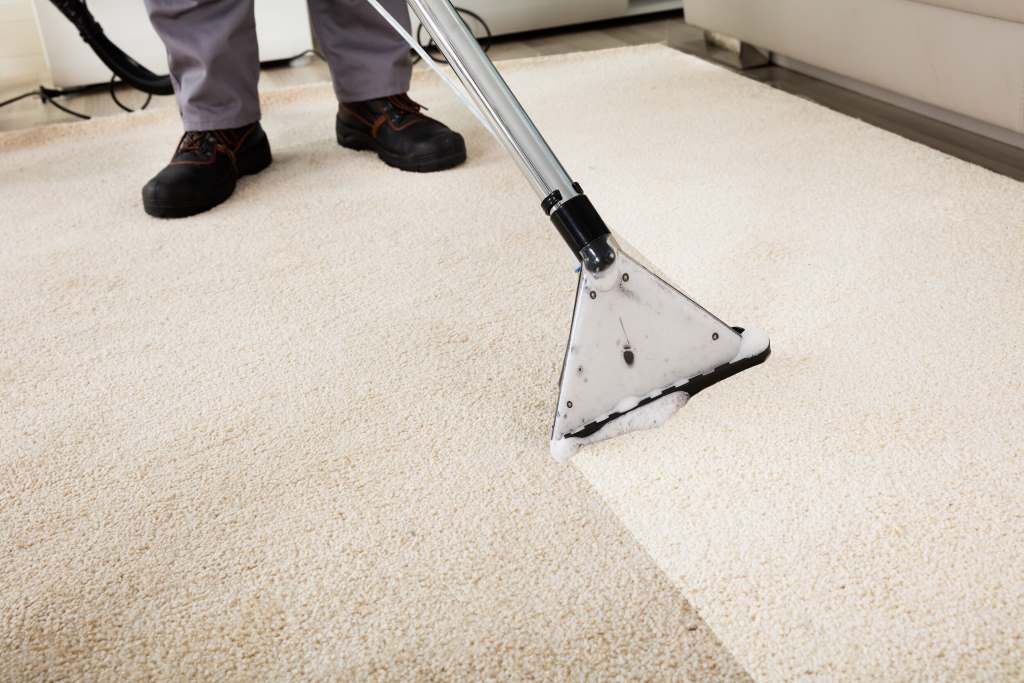
Steam cleaning upholstery is safe when used on water-safe fabrics and applied with controlled moisture levels to avoid shrinkage or mildew growth.
Steam penetrates deeper than surface cleaning solutions.
Benefits of Steam Cleaning
- kills bacteria
- removes allergens
- dissolves grease
- restores fabric texture
- eliminates odors
However, avoid steam cleaning silk, suede, or “X” coded upholstery.
How Often Should You Deep Clean Upholstery at Home?
Most upholstery should be deep cleaned every 6–12 months, but households with pets, children, or allergies benefit from cleaning every 3–6 months.
Frequency depends on usage intensity.
Recommended Cleaning Schedule
- Low-use furniture: once per year
- Family sofas: twice yearly
- Pet households: every 3–4 months
- Allergy-sensitive homes: quarterly
What Is the Best Homemade Upholstery Cleaner?
The best homemade upholstery cleaner combines warm water, white vinegar, and mild dish soap to remove dirt, odors, and light stains safely from most fabric furniture.
This solution balances cleaning strength with fabric protection.
Alternative natural options include:
- lemon juice solution for odor removal
- baking soda for grease absorption
- hydrogen peroxide (spot-use only)
How Long Does Upholstery Take to Dry After Deep Cleaning?
Upholstery typically takes 4–12 hours to dry after deep cleaning depending on humidity levels, airflow, and cleaning method used.
Faster drying prevents mildew formation.
Speed Up Drying With These Techniques
- open windows
- use ceiling fans
- run a dehumidifier
- place furniture near airflow
- avoid over-wetting fabric
What Mistakes Should You Avoid When Deep Cleaning Upholstery?
The most common upholstery cleaning mistakes include overwetting fabric, skipping patch tests, ignoring cleaning codes, and using harsh chemicals that damage fibers.
Preventing these errors preserves furniture lifespan.
Top Upholstery Cleaning Mistakes
- scrubbing aggressively
- using bleach
- soaking cushions
- mixing incompatible cleaners
- drying without airflow
Conclusion: How Can You Maintain Clean Upholstery Year-Round?
Deep cleaning upholstery at home is practical, cost-effective, and achievable with the right preparation, tools, and techniques. Regular vacuuming, prompt stain treatment, and periodic deep cleaning prevent long-term damage and maintain indoor air quality.
Instead of waiting until furniture looks visibly dirty, following a structured cleaning routine keeps upholstery fresh, hygienic, and longer lasting. Small maintenance habits—like weekly vacuuming and quarterly deep cleaning—can extend furniture life by several years.
Start with one piece of furniture today. Once you see the difference, maintaining professional-level upholstery cleanliness at home becomes simple and repeatable.
Frequently Asked Questions About How to Deep Clean Upholstery at Home
Can baking soda really clean upholstery deeply?
Yes, baking soda absorbs odors, oils, and moisture trapped in upholstery fibers, making it an effective pre-treatment before vacuuming or wet cleaning.
Is vinegar safe for all upholstery fabrics?
Vinegar is safe for most synthetic fabrics but should not be used on delicate materials like silk, velvet, or antique upholstery without testing first.
Can I deep clean upholstery with dish soap?
Yes, mild dish soap diluted with water removes dirt and body oils effectively when used sparingly and blotted properly afterward.
Should I hire professionals instead of cleaning upholstery myself?
Professional cleaning is recommended for delicate fabrics, antique furniture, or severe staining, but most modern upholstery can be safely cleaned at home.
Does steam cleaning remove dust mites from upholstery?
Yes, steam cleaning kills dust mites and bacteria by exposing them to high temperatures that penetrate fabric fibers.
How do I remove bad smells from upholstery naturally?
Sprinkling baking soda, letting it sit for 20 minutes, and vacuuming thoroughly removes most odor-causing particles naturally.
Read More Also How to Deep Clean a Fabric Sofa with the Right Vacuum Cleaner
Discover More How to Create a Low-Maintenance Garden at Home