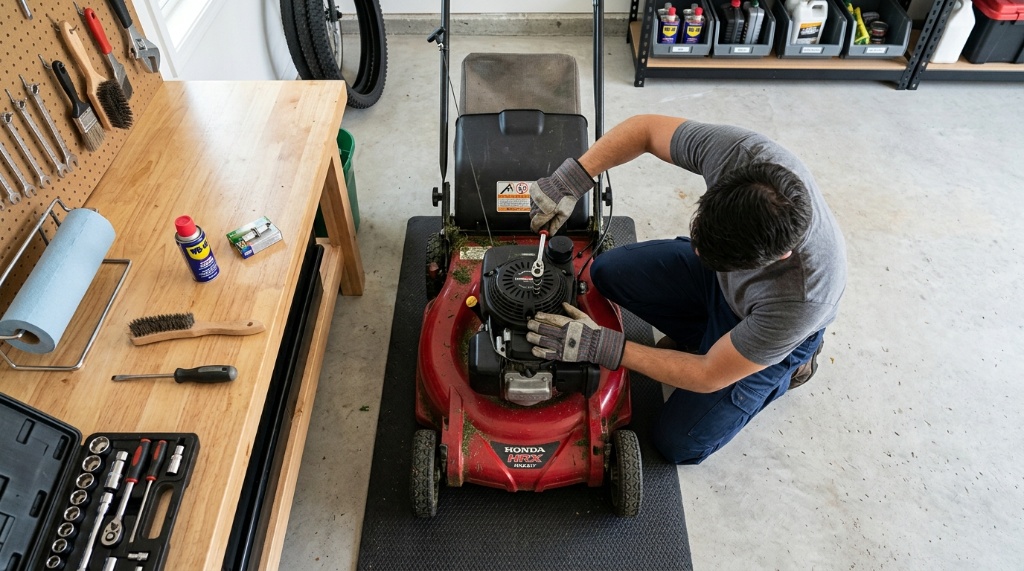
Most lawn mower owners wait until something breaks before thinking about maintenance. Then a simple oil change turns into a seized engine, or a dull blade turns into a hospital visit. The truth is that routine mower care is a 30-minute job — but only if you respect two realities: a mower holds flammable fuel and a spinning blade can slice through a shoe. Whether you’re following a solid Best USA Tools Garden Guide or just working from your driveway, this guide covers each task in a safe order, including the steps most people skip. That includes Best USA Tools Garden Guide for anyone who wants safer access to the deck area without tipping a fuel-filled machine onto its side.
Quick Answer
Do the work in this order: park on a hard, level surface, let the engine cool completely, remove the spark plug boot, disconnect the battery on electric models, and drain fuel before tipping. Never reach under a deck unless the spark plug is disconnected and the blade has stopped. Tackle one task per session — oil, air filter, spark plug, blade, and deck cleaning — rather than rushing all of them at once. Sharp blade + fresh oil + clean deck covers 90% of what keeps a mower reliable.
Key Takeaways
- Disconnecting the spark plug boot is the single most important safety step before touching the blade — it prevents accidental engine kickback.
- Always drain gasoline and let the engine cool for at least 30 minutes before tipping a mower, because residual heat and fuel vapor are a real fire risk.
- Sharpen or replace the blade every 20–25 hours of mowing; a dull blade tears grass and yellows your lawn rather than cutting it cleanly.
- Change engine oil after the first 5 hours on a new mower, then every 50 hours or once per season — whichever comes first.
- Work on a hard, level surface, and never run a mower inside a closed garage due to carbon monoxide.
Safety Fundamentals Before You Touch Anything
Every serious mower injury shares the same root cause: someone worked on a machine that still had stored energy. Fuel, heat, a spinning blade, or a live ignition system can all hurt you in seconds. Clearing those energy sources first removes almost all of the danger.
Remove stored energy in this order
- Turn off the engine and remove the key if your mower has one.
- Let the engine cool for at least 30 minutes.
- Disconnect the spark plug wire (pull the rubber boot off the plug) on gas models.
- Remove the battery or disconnect the terminals on electric models.
- Drain the fuel into an approved container if you plan to tip the mower.
Skipping step three is the mistake that sends people to the ER. A mower blade can still rotate slightly if the engine is bumped, and a connected plug means any rotation can trigger a spark.
Choose the right working space
Work on a concrete driveway or garage floor, never on grass or gravel. A level hard surface keeps the mower stable when tipped and lets you spot oil or fuel drips. If you must work inside a garage, keep the door fully open. Gas mowers produce carbon monoxide, which is odorless and can build up fast.
How Do You Safely Access the Underside of a Mower?
You have three realistic options: tip the mower onto its side, use ramps, or use a dedicated lift jack. Each has trade-offs.
Tipping the mower
Tipping is free and works on most push mowers, but it’s only safe if you follow two rules. First, always tip with the air filter and carburetor side facing up — tipping the wrong way floods the engine with oil and can ruin the air filter. Second, never tip a mower that still has fuel in the tank.
Ramps
Ramps let you work at a comfortable height, but they’re unstable if the mower rolls. You’ll need chocks and a spotter. Ramps also don’t give you great access to the center of the deck.
Lawn mower lift jacks
A dedicated lift raises the front of the deck so you can slide underneath for blade and deck work without rolling the machine. They take more storage space and cost more than a ramp, but they eliminate the fuel-spill and tip-over risks entirely. If you mow a large yard and service the mower several times a season, the convenience and safety are worth considering, To get your site ready for the warmer months ahead, check out this guide for a spring garden refresh checklist for denver, co homeowners.
Changing the Engine Oil Without Making a Mess
Oil is the lifeline of a small engine, and it’s also the task most homeowners put off. Run the engine for two to three minutes first — warm oil flows out better and carries more suspended debris with it. Then shut it off and let it cool slightly before draining.
- Place a drain pan under the oil fill or drain plug.
- Remove the dipstick to encourage flow.
- Tilt the mower (correct side up) or open the drain plug.
- Let it drain fully — usually 5–10 minutes.
- Reinstall the plug, refill with the oil grade listed in your manual (often SAE 30 or 10W-30), and check the level with the dipstick.
Dispose of used oil at an auto parts store or municipal recycling center. Never pour it down a drain or into the yard.
Replacing the Air Filter and Spark Plug
These two parts cost very little and take minutes to swap, yet they cause most rough-running and hard-starting complaints.
Air filter
On paper filters, tap out loose dust and replace if the pleats are clogged or oil-soaked. On foam filters, wash in warm soapy water, dry fully, then re-oil lightly before reinstalling. A clogged filter richens the fuel mix, which fouls the plug and wastes gas.
Spark plug
Remove the boot, unscrew the plug with a spark plug wrench, and inspect the tip. Black soot or heavy deposits mean it’s time to replace it. Gap the new plug to your engine’s spec (commonly 0.030 inches for many small mowers), thread it in by hand, then snug it with the wrench — don’t overtighten. Reconnect the boot firmly.
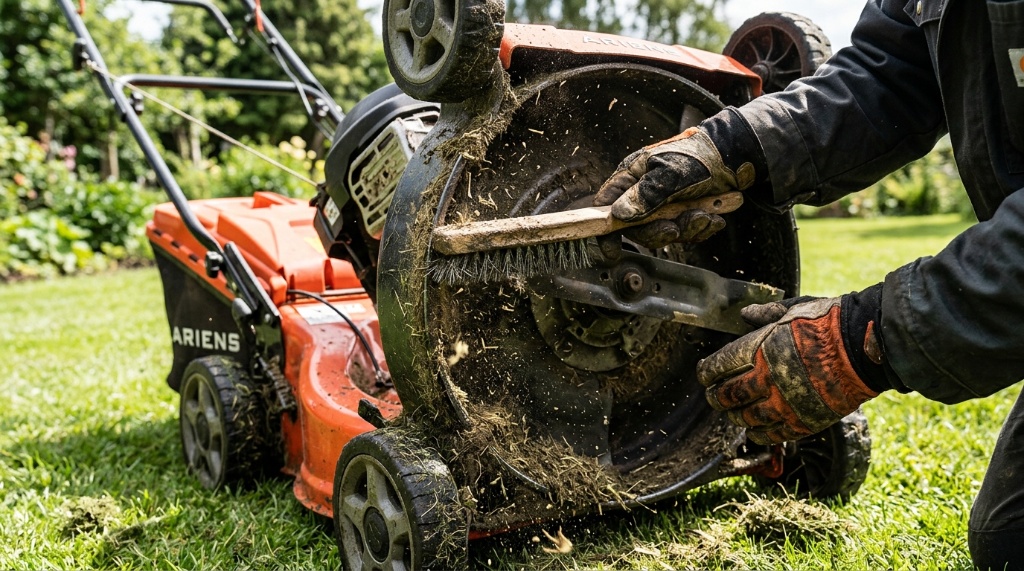
Sharpening or Replacing the Blade
A dull blade shreds grass tips instead of slicing them. Shredded tips turn brown within a day and invite disease. If you notice a ragged cut pattern or yellowing grass tips, the blade is your first suspect.
- Always remove the spark plug boot and drain fuel before starting.
- Wear heavy gloves — mower blades are sharp even when dull.
- Use a block of wood to jam the blade so it won’t spin while you loosen the bolt.
- Sharpen with a file or bench grinder at the original angle, keeping both ends balanced.
- Replace the blade if it’s cracked, bent, or missing more than about a quarter-inch of material.
Balance matters more than sharpness. An unbalanced blade vibrates, damages the crankshaft bearing, and can loosen the blade bolt over time. After sharpening, check balance on a nail or a blade balancer — the heavy side will drop. Grind a little off until it hangs level.
Cleaning the Deck and Checking the Wheels
Dried grass clippings under the deck trap moisture, which leads to rust, and they clog the discharge chute, which reduces cut quality. Scrape the underside with a plastic putty knife or a stiff brush — never a metal scraper, which gouges the paint and invites rust. Remove the spark plug boot before you reach in.
While you’re down there, check the wheels. Push mowers have plastic bushings that wear flat over time. If a wheel wobbles or squeaks, pull it off, clean the axle, and apply a few drops of light oil or a dab of grease. On self-propelled mowers, check the drive belt tension and the transmission fluid if your model has a serviceable reservoir.
Common Mistakes That Turn a Simple Job Into a Repair Bill
- Not draining fuel before tipping. Gasoline spills onto the hot engine or exhaust and can ignite.
- Tipping the wrong way. Oil floods the air filter and combustion chamber, causing hard starts and white smoke.
- Reusing a fouled spark plug. Cleaning a badly worn plug rarely restores it — replacement is cheap and reliable.
- Overfilling oil. Too much oil foams, loses lubricating properties, and blows past seals.
- Storing with old gas. Ethanol-blended fuel degrades in 30–90 days and gums up the carburetor. Add stabilizer if the mower will sit longer than a month.
- Sharpening only one side of the blade. This unbalances the blade and accelerates bearing wear.
Frequently Asked Questions
How often should I change the oil in a lawn mower?
After the first 5 hours on a new engine, then every 50 hours of operation or once per mowing season, whichever comes first. If you mow in dusty conditions or high heat, change it more often.
Can I tip my mower on its side to change the blade?
Yes, but only after draining the fuel and letting the engine cool, and always tip with the air filter and carburetor facing up. Tipping the wrong way floods the engine with oil and clogs the air filter.
Do I need to disconnect the spark plug to change a blade?
Absolutely. Disconnecting the spark plug boot prevents the engine from accidentally firing if the blade is bumped. It’s the single most important safety step in mower maintenance.
What causes a lawn mower to start hard or run rough?
The usual suspects are a fouled spark plug, a clogged air filter, stale fuel, or a dirty carburetor. Start by replacing the plug and filter and adding fresh fuel before assuming a bigger repair is needed.
Is it worth buying a lawn mower lift jack?
If you service your mower two or more times a season, a lift jack improves access to the deck and blade and removes the tip-over and fuel-spill risks of flipping the machine. For occasional one-off jobs, ramps or careful tipping can work.
Can I run my mower in the garage to warm it up first?
No. Gas mowers produce carbon monoxide, which is odorless and deadly. Run the engine outdoors, even for a brief warm-up before an oil change.
Conclusion
Safe mower maintenance comes down to a simple routine: kill the stored energy, work on a hard level surface, and never rush the blade or fuel steps. Change the oil once a season, keep the air filter and spark plug fresh, and sharpen the blade every 20–25 hours. Those five habits prevent the majority of breakdowns and injuries. Set aside one weekend afternoon per season, gather your tools, and work through the checklist slowly. Your mower will start easier, cut cleaner, and last years longer.
Focus Keyphrase:
Meta Description: