Yes, kitchens and bathrooms are the most used rooms in any house. Therefore, the flooring in these areas has to be able to withstand a lot of water, heat and wear and tear on a daily basis.
Check the water resistance rating
Some water resistant floors are not fully waterproof. Whilst some types of flooring such as LVT (Luxury Vinyl Tiles) and Porcelain Tiles are fully waterproof others such as Laminate with water resistant coatings will only withstand an occasional splash and can swell at the joints if water is allowed to sit on the floor for long periods. In bathrooms and areas around sinks etc it is best to choose fully waterproof floors.
Get the slip resistance right
A beautifully finished floor that becomes slippery when wet can be as hazardous as any other form of hazard and must be treated with the same seriousness. Ideally look for a floor with a textured finish or check the tiles’ slip resistance rating. Look for tiles rated R10 or above, you can find more information on reducing slip and trip hazards around the home on the Edinburgh council website.
Think about underfloor heating
Some underfloor heating systems are more compatible with certain flooring types than others. Ideally a flooring type should have a high thermal conductivity in order to enable the floor to warm up quickly. Flooring types such as tile and engineered stone flooring have a high thermal conductivity and so are suitable for underfloor heating. Flooring types such as thick cork or standard laminate flooring have a low thermal conductivity and so will act as insulators and prevent heat from escaping from the heating pipes.
Keep grout and seams to a minimum
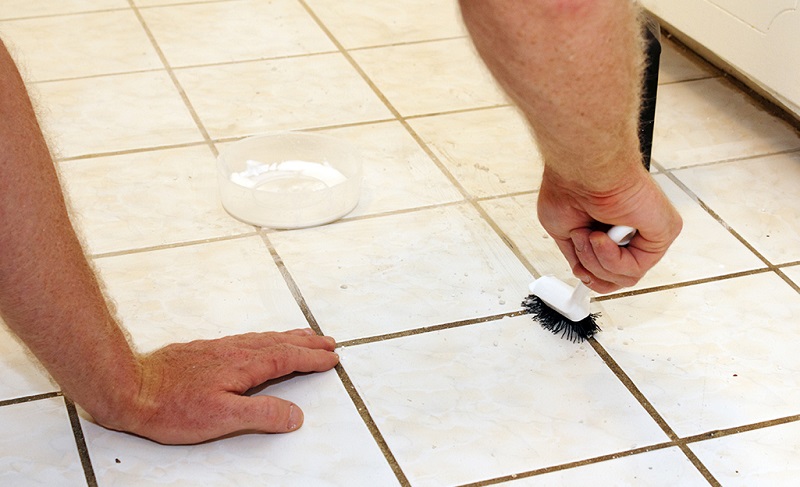
Bathrooms need to be cleaned around grout lines and between seams. By using large format tiles, using a high quality epoxy grout as opposed to a normal cement based grout or by laying a sheet vinyl floor with welded seams you can minimise the amount of cleaning required around grout lines and between seams over the long term.
Pick a kitchen floor that can take a beating
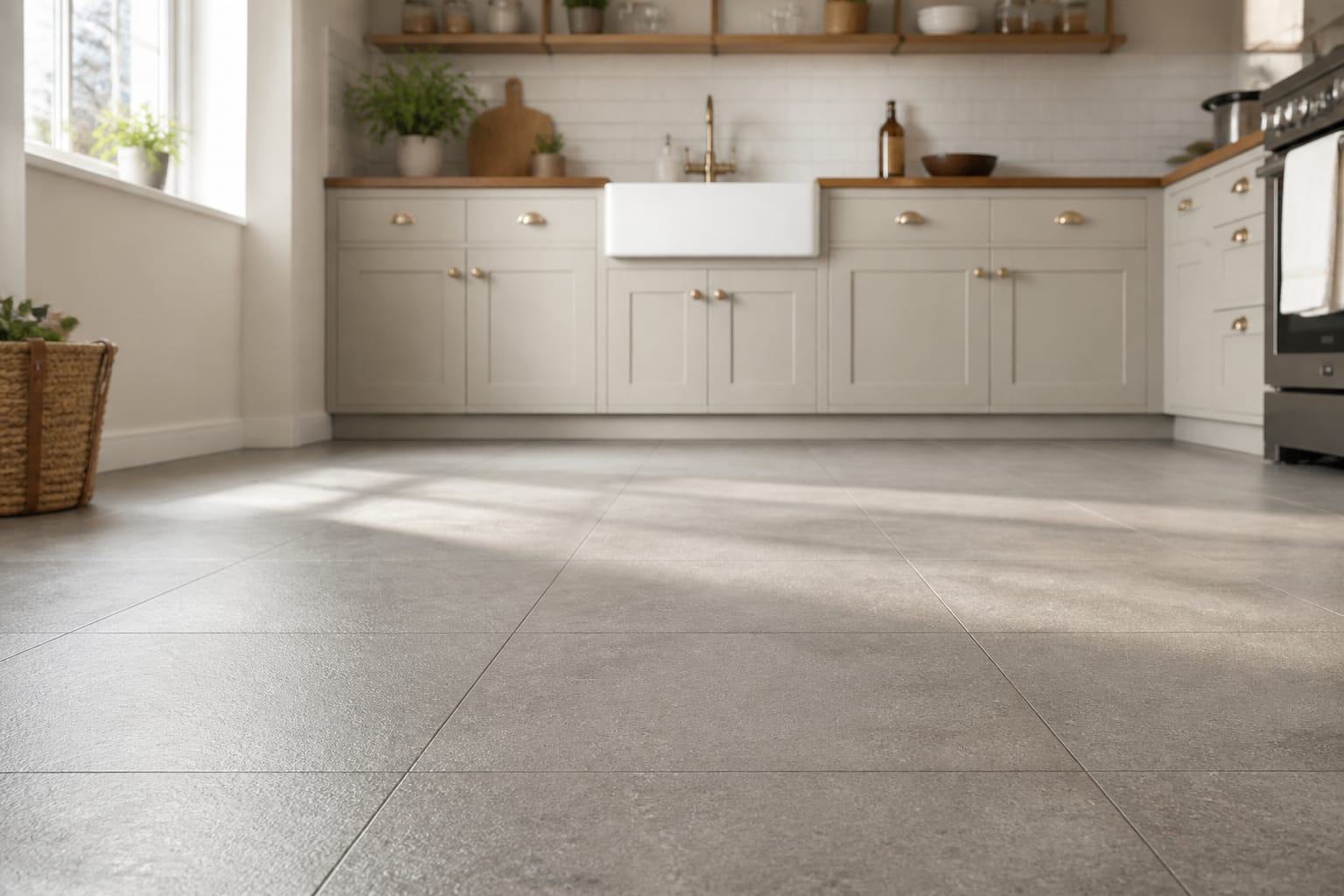
However, a kitchen floor must withstand a lot of different stresses and strains. It has to resist scratching and scuffing from heavy items like dropped pans, dragged chairs and even grease. Textured vinyl and ceramic tiles are much better at withstanding these sorts of stresses and strains than soft wood-look laminates which can easily dent and scratch. Of course, if you have children and/or pets then this is even more important. A kitchen floor rarely gets a gentle life!
Allow for older subfloors
The condition of the subfloor in older houses in Edinburgh such as tenement flats and older terraced houses can vary from uneven joists to deteriorating timber subfloors that have moved over time. There can also be issues with damp rising from the solum. Historic Environment Scotland provide guidance on Flooring in Edinburgh’s Historic Properties including the most suitable materials and methods of restoration for listed buildings and other traditional properties. A flexible subfloor preparation or a moisture barrier is required to be installed over an uneven or damp subfloor to prevent cracking of the grout and lifting of the floor covering. Flooring Edinburgh can provide you with specific advice for your home.
By following these six simple steps you can choose a suitable flooring solution for your Kitchen and Bathroom which will look great and perform well for years to come.