You can refresh greasy work garments using heavy degreasers, hot water soaks, and baking soda rinses. Gulf Coast humidity traps oily residue inside durable cotton duck and canvas workwear. Proper washing breaks down stubborn industrial lipids without weakening rugged protective fabrics.
Working in regional industrial plants and commercial kitchens exposes uniforms to heavy lubricants and cooking fats daily. Over 74 percent of trade workers report persistent oil aromas lingering in their weekly laundry. Furthermore, tropical air humidity accelerates the oxidation of trapped grease within forty-eight hours. Industrial workers must know how to eliminate grease smell from laundry without damaging durable safety gear. Mastering practical washing methods restores fresh work garments and extends textile lifespan significantly.
Key Takeaways

- Regional climate impact: High ambient humidity slows natural fabric ventilation and traps pungent odors.
- Alkaline soak benefits: Washing soda breaks down heavy petroleum lipids and animal fats effectively.
- Enzyme detergent power: Protease and lipase enzymes digest stubborn organic stains inside woven threads.
- Water temperature balance: Hot wash cycles melt hardened grease bonds for thorough rinsing.
- Vinegar neutralization: Acetic acid rinses eliminate lingering sour odors from heavy canvas gear.
- Outdoor drying advantage: Sunshine and fresh air dissipate stubborn hydrocarbon fumes naturally.
How Gulf Coast Humidity Binds Grease To Heavy Fabrics
High moisture levels in the coastal atmosphere prevent work garments from drying quickly after shifts. Damp fabrics readily absorb airborne motor oils, culinary grease, and diesel exhaust fumes. Consequently, greasy residue penetrates deep into the core fibers of heavy denim and duck workwear.
Warm indoor air combined with outdoor moisture creates ideal conditions for microbial growth in hampers. Bacteria feed on trapped organic fats and body oils, generating pungent sour odors. Therefore, letting greasy uniforms sit unwashed for several days amplifies unpleasant smells dramatically.
Heavy work canvas features thick, densely woven yarns designed to withstand tough job site abrasion. However, these tightly packed threads trap sticky hydrocarbon molecules far deeper than lightweight office shirts. Standard washing machine cycles cannot penetrate these thick yarn bundles without powerful degreasing agents.
In addition, mineral-rich local tap water can reduce the cleaning efficiency of standard laundry detergents. Hard water minerals bind with soap molecules, forming insoluble soap scum that coats fabric surfaces. This chalky film locks foul grease odors inside the cloth rather than washing them away.
Pre-Treating Tough Lubricants And Machine Oils
Effective stain removal starts before work garments ever enter the washing machine drum. First, scrape off excess surface grease using a flat putty knife or stiff cardboard edge. Removing heavy surface deposits prevents grease from spreading onto cleaner sections of the garment.
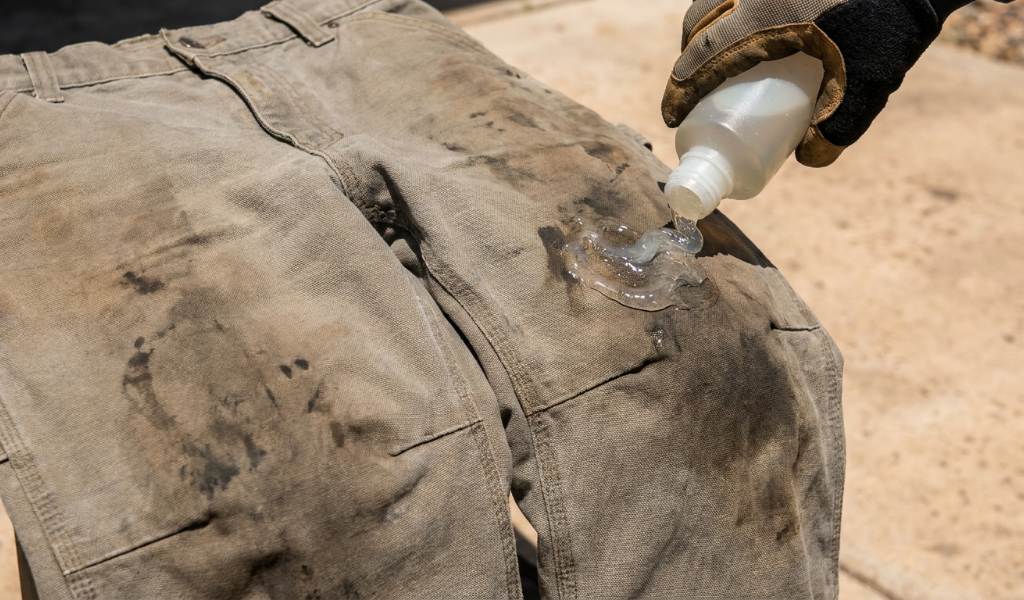
Next, apply a concentrated citrus degreaser or liquid dish soap directly to heavy spots. Citrus-based solvents break down thick petroleum grease without degrading heavy cotton workwear fibers. Just as technicians prioritize safe lawn mower maintenance to clear machinery residue, work clothes need targeted solvent action.
Gently rub the pre-treatment solution into the greasy weave using a soft nylon bristle brush. Let the formula penetrate the stained fabric for thirty minutes to emulsify stubborn grease. Afterward, rinse the treated area with warm tap water to flush away loosened grease.
For extensive oil coverage across coveralls, prepare a deep soaking bath in a wash tub. Add one cup of sodium carbonate washing soda to five gallons of hot water. Submerge the stained garments overnight so the high pH solution can break down tough oils.
Optimizing The Wash Cycle For Heavy Work Apparel
Washing heavy workwear requires the highest water temperature recommended on the garment care label. Hot water softens hardened lubricants, allowing detergent surfactants to surround and suspend oil droplets. This thermal action prevents oil from redepositing on clean garments during agitation.
Choose an industrial-strength liquid detergent containing lipase enzymes and specialized grease-cutting surfactants. Enzyme detergents actively digest vegetable fats, grease splatters, and animal tallow at a molecular level. Homeowners diagnosing common roof problems understand that addressing root moisture causes yields lasting solutions.
Avoid overloading the washing machine drum when laundering bulky coveralls and heavy canvas work pants. Dense workwear needs ample space to tumble freely through soapy water during the cycle. Proper water volume ensures that loosened oils flow out through the drain hose completely.
Run a second rinse cycle using warm water to eliminate all traces of soap scum. Adding one cup of distilled white vinegar to this rinse neutralizes leftover alkaline detergent residues. The acid rinse leaves heavy canvas fibers feeling soft without requiring waxy fabric softeners.
Managing Fire-Resistant And High-Visibility Workwear
Specialty protective clothing requires careful maintenance to preserve life-saving safety certifications. Fire-resistant garments feature specialized chemical treatments that can degrade when exposed to harsh chlorine bleach. Never use chlorine bleach or hydrogen peroxide on treated fire-resistant work pants or jackets.
Similarly, avoid using conventional fabric softeners on flame-resistant cotton blends and protective coats. Fabric softeners leave flammable hydrocarbon residues on yarn surfaces, reducing flame-retardant properties. High-durability materials seen where concrete swindon supplied site projects occur demand strict protocol adherence for safety.
High-visibility reflective stripes also require gentle handling to prevent premature cracking and peeling. Wash high-visibility vests inside out using mild liquid detergents without harsh optical brighteners. Air dry reflective clothing away from direct radiator heat to maintain high visual contrast.
Always inspect personal protective equipment after every wash to check for fabric degradation or fraying. If grease stains remain stubborn, treat the zone with an approved solvent cleaner. Preserving fabric integrity ensures your workwear protects you reliably on active job sites.
Drying And Deodorizing Strategies For Humid Climates
Drying heavy workwear thoroughly is essential to prevent mildew odors from taking root in fabric. Hang damp garments outdoors on a sturdy clothesline whenever dry sunny weather permits. Sunlight provides natural ultraviolet rays that sanitize textiles and break down lingering odor molecules.
If drying indoors, use a high-powered electric floor fan to circulate air across drying racks. Moving air speeds up moisture evaporation and prevents musty mildew scents from developing indoors. Keep the drying area well ventilated by opening a window or running a dehumidifier.
When using an electric dryer, verify that all grease stains have vanished before starting heat cycles. High dryer heat permanently sets oily stains and bakes rancid aromas into the fabric weave. If faint oil smells persist, wash the load again before placing clothes into the dryer.
Add wool dryer balls to the dryer drum to fluff heavy canvas fabrics naturally. Dryer balls separate tumbling garments, improving hot airflow and cutting drying time by twenty percent. They soften rugged work pants without leaving behind waxy chemical residues.
Preventing Cross-Contamination In Home Laundry Rooms
Never mix heavily soiled industrial workwear with everyday family clothing or delicate bedding items. Greasy work pants can transfer petroleum residues and foul odors onto softer household garments during washing. Designate a separate heavy-duty hamper specifically for dirty shop clothes and work coveralls.
Clean your washing machine tub immediately after washing a heavy load of greasy workwear. Run an empty hot water cleaning cycle with two cups of white distilled vinegar. This maintenance cycle strips grease deposits from the agitator and rubber door gaskets.
Wipe down the interior metal drum with a damp microfiber cloth to remove residual grime. Trapped motor oil droplets can leave a dark ring inside front-load washing machines over time. Keeping the drum clean ensures your regular family clothes remain spotless and fresh.
Store degreasing sprays and pre-treatment brushes directly beside your utility sink for rapid access. Treating stained gear right after returning home from a shift prevents oils from setting. Quick attention saves time and makes weekly laundry tasks far more manageable.
Building A Long-Term Workwear Maintenance System
Investing in durable work clothing requires a structured care system to maximize garment performance. Rotate through three or four sets of work uniforms throughout the working week. Alternating garments allows fibers to rest and air out between tough shifts.
Inspect seams, knees, and elbow reinforcements periodically for fraying or loose stitching. Repair minor rips immediately using heavy-duty polyester thread to prevent catastrophic tears on the job. Proper repair work extends the functional life of expensive trade workwear considerably.
Replace worn garments when fabric thinning compromises tear resistance or thermal protection standards. High-wear zones like knees and cuffs often show the first signs of fabric breakdown. Prioritizing wardrobe maintenance guarantees dependable comfort and safety on every demanding job site.
Establish a monthly deep-soak routine for all workwear using sodium percarbonate oxygen bleach. The bubbling oxygen action lifts deeply embedded grime without fading tough colored fabrics. Your work clothes will maintain a clean, professional appearance throughout the entire working year.
Conclusion
Refreshing greasy workwear requires prompt pre-treatments, elevated wash temperatures, and smart laundry habits. Coastal humidity complicates garment care, but effective degreasing formulas dissolve stubborn oils easily. Simple household supplies like washing soda and white vinegar restore rugged textiles reliably.
Upgrade your workwear laundry routine today to eliminate persistent industrial odors for good. Protect your valuable gear with targeted soaking methods and regular machine maintenance cycles. Take charge of your laundry habits now to enjoy clean, durable workwear every day.
Frequently Asked Questions
Can I use dish soap to clean greasy work coveralls?
Yes, liquid dish soap breaks down tough industrial grease safely before machine washing.
Why does my workwear still smell greasy after washing?
Cold wash temperatures and detergent buildup often fail to melt and remove embedded oils.
Does vinegar ruin fire-resistant treatments on protective clothing?
Distilled white vinegar is safe and removes soap residues without harming flame resistance.
How do I remove motor oil smell from my dryer?
Wipe the dryer drum with a vinegar-soaked cloth and run an empty air-fluff cycle.
How often should industrial workers deep-soak their work uniforms?
Deep-soak heavily soiled workwear once every two weeks to prevent grease accumulation.