
A front door can occupy less than two percent of a home’s exterior, yet it draws the eye before anything else. That’s why good front door color ideas matter so much: the right shade can make a plain house look considered and welcoming, while the wrong one fights with the siding, the roof, or the trim. If you’re repainting before a sale, refreshing an older entry, or simply tired of the same old white, this guide walks through how to choose a color with confidence. You can also think of the door as the finishing touch on a larger Home Plan Idea for how the whole facade reads from the street.
Quick answer: Choose a front door color that contrasts clearly with your siding and trim, then test it on the actual door in real daylight before committing to a full can. Deep reds, navy blues, blacks, and warm greens are reliable choices for most homes, while bright shades work best on simple facades that can carry the attention.
What is front door color ideas?
Front door color ideas are planned color choices for the entry door, selected to work with the rest of the exterior rather than in isolation. The goal isn’t simply a pretty shade. It’s a shade that reads clearly from the curb, suits the architecture, and makes the entrance easy to find.
Think of the door as the punctuation mark on the facade. A colonial with symmetrical windows often suits a traditional color such as deep red, forest green, or black. A mid-century ranch may carry a brighter shade, like mustard or teal, because its simple lines leave room for a bolder accent. A cottage with stone or brick walls tends to reward softer tones that echo the masonry.
Color also does structural work. A dark door on a light house creates a strong focal point. A door painted close to the siding color recedes and makes the entrance feel quieter. Neither approach is wrong; they simply produce different effects.
Three elements set the boundaries for any choice:
- Fixed colors you can’t easily change: roof shingles, brick, stone, and paving.
- Colors you can change: siding, trim, shutters, and the door itself.
- Light: the direction the door faces and how much sun or shade it receives.
Many homeowners treat the door as part of a broader exterior palette, which is why it helps to plan it alongside siding and trim rather than after the fact.
A color that looks perfect on a paint chip can look wrong once the trim and roof are in view. Judge every candidate against the whole facade, not against a white background.
Key takeaway: front door color ideas work best when they respond to the house’s architecture, fixed materials, and light exposure.
Why front door color ideas matters
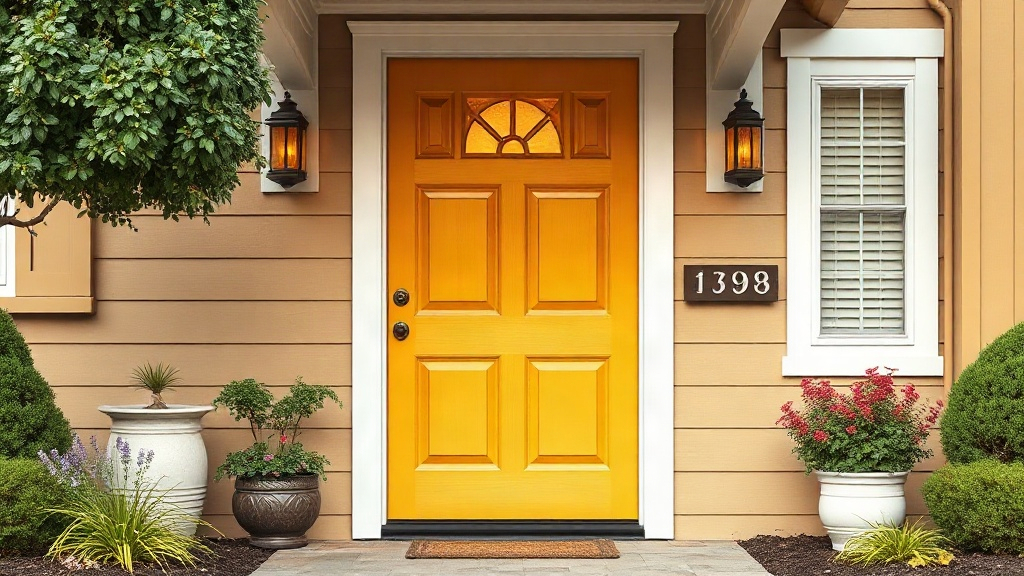
The front door is the one part of the exterior that visitors physically approach, so its color shapes both first impressions and daily experience. A well-chosen shade signals care and attention. A poorly chosen one can make an otherwise handsome house look unfinished.
There’s a practical side too. A door that contrasts with its surroundings is easier to spot from the street, which helps guests, delivery drivers, and emergency services find the entrance quickly. On a long facade or a recessed porch, contrast does real work.
Resale is another factor. Exterior color choices are among the first things buyers notice, and a front door in good condition with a coherent color reads as maintained. That doesn’t mean you must choose a safe neutral. It means the color should look intentional rather than accidental.
Consider how often the door is seen. You pass it every day, and so does everyone who visits. A shade you love but that clashes with the brick will annoy you for years, while a considered color quietly improves the whole street view.
Budget matters as well. Painting a front door is one of the least expensive exterior updates available: a single quart of exterior paint often covers a door with some left for touch-ups. That low cost makes the door a smart place to experiment before committing to bigger projects like siding.
Few exterior projects deliver as much visible change per dollar as repainting the front door.
Key takeaway: front door color ideas matter because the door is both the most-seen and the most affordable element of the facade.
Best practices
Start with the colors you cannot change. Photograph the front of your house in morning and late afternoon light, then note the roof, brick, stone, and paving tones. Every door color should sit comfortably beside those fixed elements.
Next, decide on contrast. A strong contrast makes the door a focal point; a soft contrast makes it blend. Most homes benefit from a door that is noticeably darker or lighter than the siding, because it defines the entrance clearly.
Match the finish to the architecture. Gloss suits traditional doors with paneling and detailed trim. Satin or semi-gloss works well on modern flat doors and hides minor imperfections better than high gloss.
Test before you buy. Paint a large sample board, let it dry, and tape it to the door for a few days. Look at it in sun, shade, and artificial porch light. Colors shift dramatically outdoors, and a shade that looks muted indoors can turn vivid in direct sun.
Consider the trim and hardware. A door color should relate to the trim color and to the metal finish of the handle, knocker, and house numbers. Brass warms up deep greens and reds; black hardware sharpens navy and charcoal.
If you’re planning a wider refresh, it helps to look at curb appeal paint colors as a complete palette rather than choosing the door in isolation.
Here’s a rough guide to how common door colors tend to behave:
Comparison: popular door color families
| Color family | Best suited to | Watch out for |
|---|---|---|
| Deep red | Brick, white, and cream siding | Can look heavy beside strong orange brick |
| Navy blue | Gray, white, and tan siding | Reads almost black in deep shade |
| Black or charcoal | Light siding, modern homes | Can feel flat without good trim contrast |
| Forest or sage green | Stone, wood, and earthy palettes | Pale greens can vanish against foliage |
| Bright yellow or teal | Simple facades, cottages | Overpowering on busy or ornate fronts |
Notice how each color pairs with fixed materials rather than standing alone.
A north-facing door spends much of the day in shadow. Paint half your sample board and leave it on the door for a week so you see it in every light condition.
Key takeaway: good front door color ideas come from testing against the whole facade, not from picking a favorite shade in a store.
Common mistakes to avoid
The most frequent error is choosing a color in isolation. A shade picked from a small chip under fluorescent light rarely matches how it performs on a sunlit door beside brick or stone.
A second mistake is ignoring the roof. Roof shingles are a large, permanent color field, and a door that fights with them will always look slightly off. Check the door against the roof from the street, not from the porch.
Overpowering a busy facade is another trap. If the house already has patterned brick, decorative trim, and prominent shutters, a bright door adds one more competing element. In that case, a deeper, quieter shade usually reads better.
Skipping surface preparation undermines the best color choice. Exterior doors face sun, rain, and temperature swings, so sanding, cleaning, and priming are not optional. Paint applied over a dirty or glossy surface will peel, and no color looks good once it’s flaking.
Homeowners also forget the sides and edges of the door. Painting only the face leaves visible bands of the old color whenever the door swings open. Remove the hardware or mask it carefully, and coat all edges.
Finally, avoid choosing gloss purely for shine. High-gloss finishes highlight every dent and brush mark. Satin and semi-gloss are more forgiving on older doors.
Some neighborhoods and historic districts restrict exterior colors, including front doors. Confirm the rules before you buy paint.
Key takeaway: most door-color disappointments come from poor testing, neglected prep, or ignoring the colors already on the house.
FAQ
How much does it cost to paint a front door?
Materials are modest: a quart of quality exterior paint, primer, sandpaper, and a brush or roller. Hiring a painter costs more because of labor rather than supplies. The total depends on your area and whether the door needs stripping or repair first.
How long does exterior door paint last?
A well-prepped door in a sheltered spot typically holds its finish for several years. Doors facing full sun or driving rain wear faster. Inspect annually and touch up chips before moisture gets underneath.
Can I paint a front door a different color on each side?
Yes. Many people paint the exterior a bold accent and the interior side to match the hallway. Choose an exterior-grade paint for the outside face, since indoor paint won’t hold up to weather.
What color front door suits a brick house?
It depends on the brick’s undertone. Warm red brick pairs well with deep green, navy, black, or cream. Cool or painted brick opens up more options, including charcoal and soft blue.
Should the front door match the shutters?
It can, but it doesn’t have to. Matching creates a tidy, traditional look. A contrasting door adds emphasis and helps the entrance stand out.
Conclusion
Choosing a front door color comes down to three things: the colors you can’t change, the contrast you want, and how the shade behaves in real light. Start with the roof, brick, and stone, test samples on the door itself, and prep the surface properly so the finish lasts. A deep red, navy, black, or green will suit most homes, while brighter shades reward simpler facades. Pick two or three candidates this week, tape up sample boards, and judge them from the curb at different times of day before you buy the paint.


