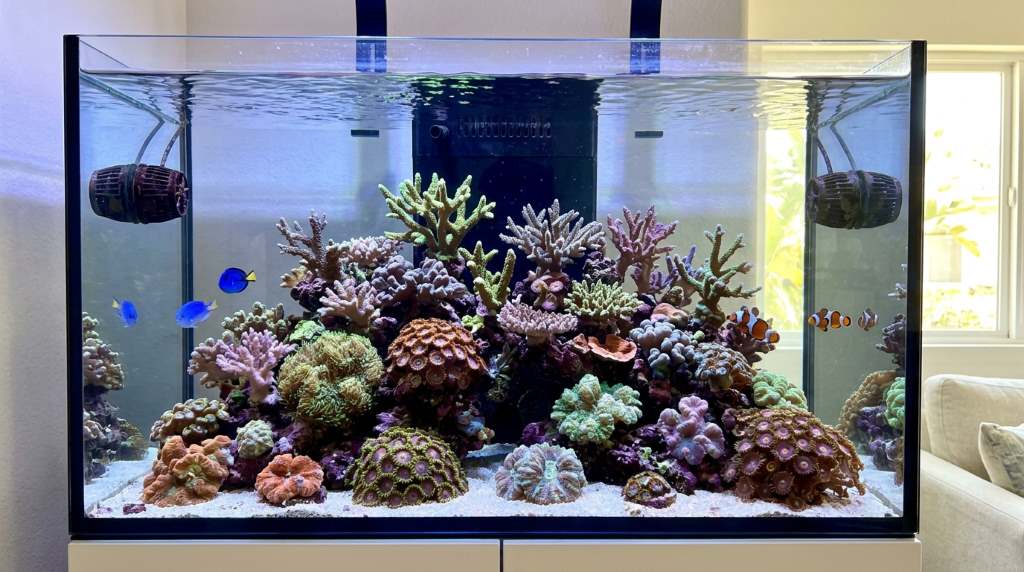
Coral polyps usually close because the reef tank environment has changed, stressed, or irritated them. In San Diego, common triggers include salinity swings, temperature changes, lighting, flow, pests, and untreated tap water. Many reef tanks target 1.025 to 1.026 specific gravity and roughly 76 to 80°F. If your aquarium also has surface buildup, check this fish tank oily film fix separately.
Key Takeaways
- Closed polyps usually signal stress, irritation, acclimation, or unfavorable tank conditions.
- Check salinity, temperature, alkalinity, pH, nutrients, and ammonia before changing anything.
- San Diego tap water requires proper treatment before entering a reef aquarium.
- Sudden lighting changes can cause severe polyp retraction, especially after coral placement.
- Too much direct flow can irritate coral, while weak flow allows debris to accumulate.
- Persistent closure requires inspection for pests, chemical contaminants, tissue damage, and disease.
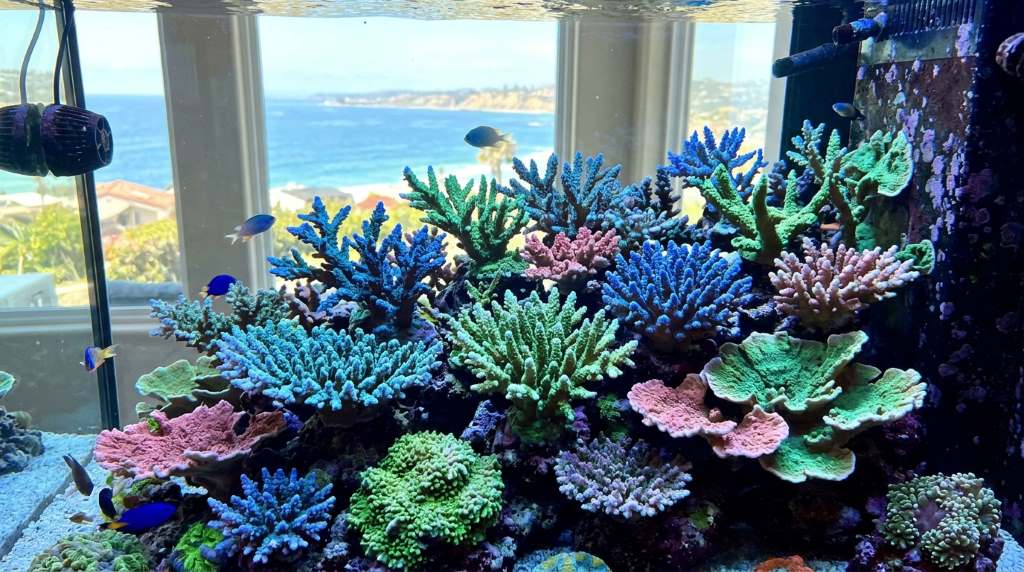
Start With the San Diego Water Source
San Diego’s municipal water is designed for people, not sensitive reef organisms. Therefore, never assume safe drinking water automatically suits coral. The City uses disinfectants, including chlorine or chloramine, which can harm aquatic life without proper treatment.
For reef systems, use purified RO/DI water for evaporation replacement and saltwater preparation. Additionally, verify your source water with a reliable TDS meter and replace exhausted filtration media promptly. This simple habit removes one major variable from your troubleshooting process.
San Diego water also contains substantial mineral content, with hardness averaging around 276 ppm. That hardness does not make tap water suitable for direct reef use, because disinfectants and other dissolved substances remain important concerns.
Consequently, avoid topping off a reef aquarium with untreated faucet water. Even small additions can gradually alter chemistry, introduce contaminants, and complicate your effort to identify the actual problem.
Before making corrections, test your RO/DI output rather than guessing. If the reading rises significantly from your normal baseline, replace appropriate cartridges or investigate membrane performance.
Check the Tank’s Physical Environment
Corals respond to their surroundings, so inspect the entire aquarium before dosing anything. Even nearby household changes can affect temperature, airflow, vibration, lighting, or electrical equipment.
For example, bedroom renovation ideas can involve dust, paint fumes, adhesives, cleaning products, or construction debris. Keep such materials away from open aquariums and never allow aerosolized chemicals near the tank.
Likewise, examine your aquarium cover, fans, heater, pumps, and cooling equipment. A malfunctioning fan can increase temperature, while an unreliable heater can create repeated thermal swings.
Temperature matters because corals tolerate a range better than they tolerate rapid changes. Aim for a stable reef temperature instead of chasing a perfect number every few hours.
Also inspect the aquarium at night with a dim red light. Some pests, worms, predatory snails, and unwanted visitors become easier to identify after the main lights turn off.
Test Chemistry Before Making Big Changes
Water chemistry often explains unexplained polyp closure, especially when several colonies retract simultaneously. Start with temperature, salinity, alkalinity, pH, ammonia, nitrate, and phosphate.
For many reef systems, salinity around 1.025 to 1.026 specific gravity provides a useful reference range. However, stability matters more than chasing a particular number without understanding your coral species.
Alkalinity deserves special attention because reef systems can consume it quickly. Sudden alkalinity changes can stress stony corals and create poor conditions for continued calcification.
Calcium and magnesium also support skeletal growth, particularly for LPS and SPS corals. Test them when closure persists, especially after dosing changes or unusually rapid coral growth.
Furthermore, do not aim for zero nitrate or phosphate simply because the aquarium looks cleaner. Corals need available nutrients, while excessive concentrations can create other problems.
If ammonia or nitrite appears in an established reef, investigate immediately. Check biological filtration, livestock losses, overfeeding, equipment failures, and recent additions before making aggressive corrections.
Record every result before changing the water. A simple written log can reveal gradual trends that one isolated test cannot show.
Review Lighting and Water Movement
Lighting causes many cases of sudden coral retraction, especially after moving colonies or changing LED settings. Excessive intensity can force polyps to remain closed while the coral adjusts.
Therefore, avoid increasing brightness simply because another reef tank uses stronger lighting. Different coral species, depths, mounting positions, and water clarity produce different light exposure.
Use a PAR meter when possible, particularly after replacing fixtures or changing coral positions. Measure at the coral’s actual location rather than relying on the light’s advertised output.
Water movement creates another balancing act. Strong, direct flow can physically irritate delicate tissue, while weak circulation allows detritus and waste to settle around polyps.
Instead, provide varied movement that gently moves coral tissue without continuously blasting one direction. Randomized flow usually works better than a constant, narrow stream.
When only one coral remains closed, compare its position with healthy colonies nearby. A localized flow or lighting problem becomes more likely when the rest of the reef looks normal.
Look for Pests, Irritation, and Aggression
Sometimes the aquarium parameters look excellent because another organism causes the problem. Fish, crabs, snails, worms, and coral pests can repeatedly irritate vulnerable polyps.
Watch the coral during different parts of the day. A fish that repeatedly nips a colony may explain closure that appears only during feeding or daylight hours.
Next, inspect the coral’s base, crevices, and surrounding rockwork. Look for unusual mucus, bite marks, eggs, small moving organisms, tissue recession, or unexplained discoloration.
Corals can also sting neighboring colonies when they touch. Give aggressive species enough separation, particularly when colonies expand rapidly or develop long sweeper tentacles.
If several corals suddenly retract after adding livestock, investigate that addition first. New animals can introduce pests, alter nutrient loads, disturb rockwork, or create territorial conflicts.
Do not immediately treat the entire aquarium with medication. First identify the suspected cause, because unnecessary treatments can create additional stress or damage beneficial organisms.
Consider Chemical Contamination
Unusual coral closure can indicate a contaminant that standard reef tests cannot detect. Household chemicals, metals, cleaning products, and equipment failures can introduce unwanted substances.
Check whether anyone recently cleaned the glass, changed filtration media, painted nearby surfaces, or used aerosol products. Even accidental contact between contaminated hands and aquarium water can create problems.
Activated carbon can help remove certain dissolved organic compounds and chemical irritants. However, carbon cannot solve every contamination event, so treat it as one troubleshooting tool.
Also inspect heaters, pumps, magnets, probes, and other submerged equipment for cracks or corrosion. A damaged component can release materials that irritate sensitive coral tissue.
Power interruptions deserve attention too, particularly during extreme weather or equipment failures. Reliable electrical planning can protect circulation, temperature control, and oxygenation when equipment normally runs continuously.
For example, solar battery storage illustrates why backup capacity depends on actual electrical demand. Reef keepers should similarly identify essential loads before choosing emergency aquarium backup equipment.
Use Water Changes Carefully
A water change can help when contaminants or poor chemistry cause coral stress. However, a rushed correction can create another parameter swing and prolong the closure.
First, prepare replacement water with matching temperature and salinity. Then confirm the new water’s alkalinity when your reef contains sensitive stony corals.
Make moderate corrections instead of repeatedly replacing large volumes without testing. Your goal involves restoring stability while removing the suspected problem.
Cloudy water can also accompany substrate disturbances, bacterial blooms, or filtration problems. If sand movement caused the cloudiness, avoid repeatedly stirring the bed while corals remain stressed.
A useful reference for troubleshooting cloudy systems is this sand swap cloudy tank discussion. Although the situation differs, the same principle applies: identify the disturbance before making multiple changes.
After a corrective water change, give the aquarium time to stabilize. Constantly changing salinity, dosing, lighting, and flow makes it difficult to determine whether the original problem improved.
Know When Closed Polyps Are Normal
Not every instance of closed polyps indicates an emergency. Many corals naturally retract during darkness, feeding, transport, acclimation, spawning, or temporary environmental changes.
Newly introduced coral may remain closed for several days while adapting to its new surroundings. Therefore, avoid moving it repeatedly unless clear signs of worsening stress appear.
Some soft corals also periodically shed an outer layer. During this process, the colony may look withdrawn before returning to normal extension.
Observe the coral’s trend rather than judging one photograph. Healthy color, intact tissue, normal response, and gradual reopening provide more useful information than appearance alone.
A Practical 24-Hour Troubleshooting Plan
When several colonies close suddenly, begin with the simplest checks. Confirm temperature, salinity, pump operation, heater function, and visible water quality.
Next, test alkalinity, pH, ammonia, nitrate, and phosphate. Compare every result against your established baseline rather than relying exclusively on generic target values.
Then inspect every coral under normal lighting and after dark. Look for pests, tissue damage, aggression, detritus accumulation, and abnormal mucus.
Afterward, review recent changes from the previous week. Consider new livestock, feeding changes, dosing adjustments, filter maintenance, lighting changes, water changes, and equipment replacements.
If you discover a clear cause, correct only that variable first. This controlled approach helps you measure the coral’s response without introducing several new stresses.
If the coral continues deteriorating despite stable conditions, consider an ICP water analysis. Such testing can reveal trace-element abnormalities or contaminants that ordinary home kits cannot measure.
When Should You Worry About Closed Coral Polyps?
Persistent closure becomes more concerning when it accompanies tissue recession, bleaching, severe discoloration, foul odors, or rapid colony decline. Those signs suggest more than ordinary acclimation or nighttime behavior.
Act faster when multiple unrelated coral species deteriorate simultaneously. A shared environmental problem becomes more likely than a species-specific issue.
Likewise, respond quickly after an obvious equipment failure or contamination event. Early intervention can prevent temporary stress from becoming permanent tissue loss.
However, avoid panic-driven corrections. Reef aquariums usually respond better to measured diagnosis, stable conditions, and gradual recovery than constant intervention.
Conclusion: Restore Stability Before Chasing Perfection
Closed aquarium coral polyps usually indicate stress rather than one single disease. In San Diego, pay particular attention to treated source water, evaporation, temperature stability, lighting, flow, and contamination risks.
Start by testing instead of guessing, then correct the clearest problem with the smallest effective change. Keep detailed records and give the coral time to respond before making another adjustment.
If your polyps remain closed, work through the troubleshooting sequence systematically and inspect for pests or contaminants. When the cause remains unclear, seek professional aquarium advice or laboratory water analysis.
Most importantly, protect stability after recovery. A consistent reef environment gives coral the best opportunity to reopen, feed, grow, and maintain healthy tissue.
FAQs
Why are my coral polyps suddenly closing?
Sudden closure usually results from changes in water chemistry, temperature, lighting, flow, contamination, or physical irritation.
Can San Diego tap water cause coral problems?
Yes, untreated tap water can introduce disinfectants and dissolved substances that stress reef aquarium organisms.
Should I move coral when its polyps stay closed?
Move coral only after identifying a likely lighting, flow, aggression, or placement problem.
How long can coral polyps stay closed?
Corals can remain closed for hours or several days after stress, transport, acclimation, or environmental changes.
When should I test aquarium water?
Test immediately when coral suddenly closes, especially after equipment failures, livestock additions, dosing changes, or water changes.