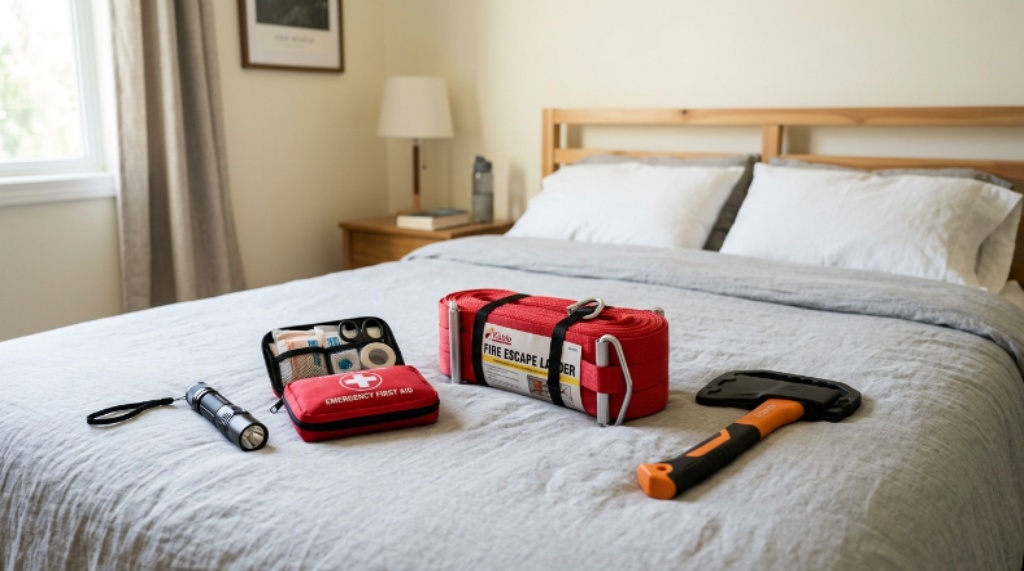
Most people think about home safety in terms of smoke detectors and door locks. However, true preparedness goes much further. Emergencies can happen at any time, and your bedroom is often where you are most vulnerable. You may be asleep when a fire starts. A storm could knock out power before you can react. In those first critical moments, having the right tools within reach can make a real difference.
This guide walks you through everything you need to consider when choosing survival tools for your bedroom. From what to keep on your nightstand to how to store gear safely, you will find practical advice that is easy to follow.
Why Your Bedroom Deserves Special Attention
When an emergency strikes at night, you have very little time to act. Your bedroom is the room where you spend roughly a third of your life, yet most people store zero safety tools there. The kitchen has fire extinguishers. The garage has first aid kits. However, the bedroom is often completely overlooked.
Additionally, bedrooms on upper floors present unique escape challenges. A blocked hallway or a fire spreading from below can cut off your normal exit route. Therefore, your bedroom should be treated as its own preparedness zone, independent of the rest of the house.
Think of it this way. If you had to survive the first fifteen minutes of an emergency using only what is in your bedroom, would you be ready?
Start With a Threat Assessment
Before you buy anything, take a few minutes to think about the most likely emergencies in your area. This simple step helps you prioritize the right tools.
Ask yourself these questions:
- Does your home have multiple floors? If so, you need an escape route that does not depend on stairs.
- Do you live in a region prone to earthquakes, floods, or wildfires? Each of these requires slightly different preparation.
- Do you have children or elderly family members sharing the home? Their needs may affect what gear you choose and where you store it.
- Is your bedroom door solid or hollow? A solid door buys you precious extra minutes during a fire.
Once you understand your specific risks, building your bedroom safety kit becomes much more focused and effective.
The Core Emergency Tools Every Bedroom Needs
Not every piece of survival gear belongs in a bedroom. Space is limited, and clutter creates its own problems. Therefore, focus on tools that serve multiple purposes and take up minimal space.
Flashlight and Backup Power
A reliable flashlight is the single most important tool you can keep in your bedroom. Power outages are the most common emergency most people will ever face. A bright, battery-powered flashlight with extra batteries stored nearby covers a wide range of situations. Additionally, consider a small headlamp. It frees up your hands when you need to move quickly or assist someone else.
Smoke and Carbon Monoxide Detector
Every bedroom should have its own smoke detector. A combined smoke and carbon monoxide detector is even better. These devices are inexpensive and genuinely save lives. Check the batteries every six months and replace the unit every ten years.
A Charged Personal Emergency Device
A portable battery bank keeps your phone charged during extended outages. Your phone is your connection to emergency services, weather alerts, and family members. It is one of the most overlooked emergency tools people forget to include in their bedroom setup. Keep a small battery bank on your nightstand and make charging it part of your weekly routine.
Window Escape Ladder
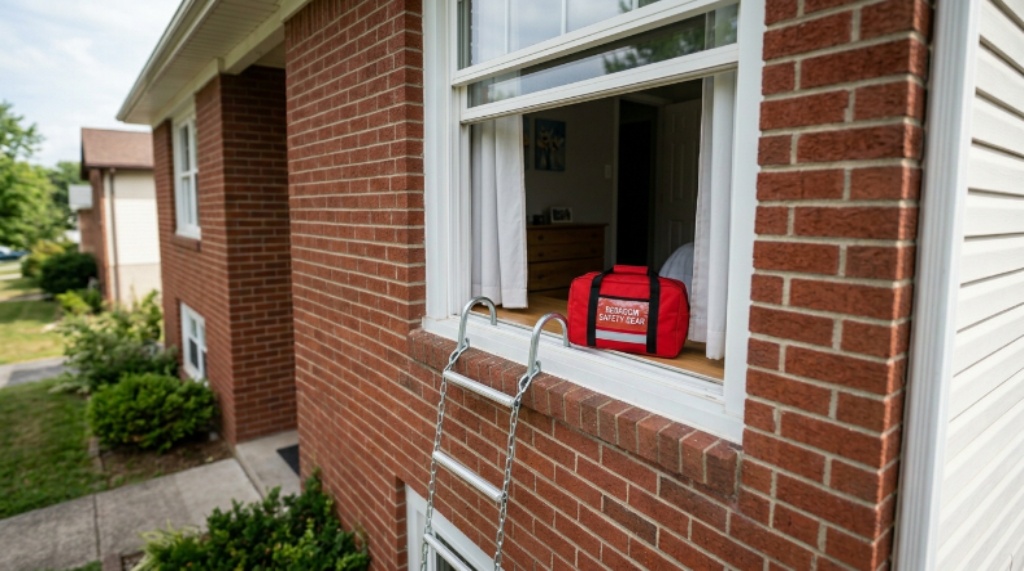
If your bedroom is on an upper floor, a foldable window escape ladder is essential bedroom safety gear. These ladders hook over a windowsill and allow you to descend safely to the ground. They are compact, affordable, and easy to store under a bed or in a closet. Practice deploying it at least once so you are not fumbling with it in the dark.
The Case for Compact Axes in Home Preparedness
Many people are surprised to learn that compact axes appear regularly on lists of recommended home survival tools. However, their usefulness in a genuine emergency is well established.
A compact axe can break through a jammed door, clear debris blocking an exit, or help you escape through a wall if no other option exists. Firefighters carry axes for exactly these reasons. For a homeowner, a smaller version of the same tool offers similar benefits without taking up significant space.
When choosing compact axes for home use, look for a model with a fiberglass or rubber-grip handle. These materials hold up under stress and are easier to control. A blade guard or sheath is essential for safe storage. Keep the axe in a fixed location that you can reach in the dark without searching.
It is worth noting that compact axes are tools, not weapons. Store them responsibly, keep them out of reach of children, and make sure every adult in the household knows where they are and how to use them safely.
Building Your Bedroom Safety Kit Step by Step
Now that you know the core items, it helps to think about how to bring them together into a functional kit. A disorganized collection of tools is only slightly better than no tools at all.
Here is a simple approach:
- Choose a dedicated storage spot: Under the bed, in the bottom drawer of a nightstand, or on a shelf in the closet. The location should be easy to reach in total darkness.
- Use a single bag or box: A small duffel bag or a plastic bin works well. Everything stays together and can be grabbed quickly.
- Label everything: Simple labels on pouches or compartments help other household members find what they need without guidance.
- Review the kit twice a year: Replace expired items, recharge battery banks, and test flashlights. Do this when you change your smoke detector batteries.
Additionally, tell every adult in your household where the kit is stored. Preparation is only useful if everyone knows the plan.
Medications and Personal Necessities
Emergency preparedness is not only about fire and escape. A power outage lasting several days or a natural disaster can cut off access to pharmacies and medical care. Therefore, your bedroom kit should include a three-day supply of any prescription medications you take regularly.
Beyond medications, think about:
- A pair of glasses or contact lens supplies if you need vision correction
- A small first aid kit with bandages, antiseptic wipes, and pain relievers
- Copies of important documents stored in a waterproof pouch
- Cash in small bills, since ATMs may be offline during extended outages
These additions do not take much space. However, they can significantly reduce stress and risk during a prolonged emergency.
Keeping Children and Pets in Mind
If you have young children, their bedroom preparedness needs differ from yours. They need simpler tools and clearer instructions. A glow-in-the-dark path marker on the floor leading to the door and window is a low-cost addition that helps children navigate in the dark.
For pets, keep a leash and carrier accessible. During a fire or evacuation, animals can panic and hide. Having their gear ready means you spend less time searching and more time moving.
Furthermore, practice your escape plan as a family at least once a year. Walk through the route in the dark. Use the flashlights. Try the window ladder if you have one. Familiarity with the process reduces panic when the situation is real.
Conclusion
Bedroom preparedness is one of the most practical and overlooked aspects of home safety. The good news is that building a solid kit does not require a large budget or a lot of space. Start with the essentials: a flashlight, a smoke detector, a charged battery bank, and a window escape ladder if you are on an upper floor. Consider adding compact axes if your home layout presents blocked exit risks. Round out your bedroom safety gear with medications, a first aid kit, and personal documents.
Most importantly, make a plan and share it with everyone in your home. Emergency tools are only effective when people know how to use them. Review your kit regularly, practice your escape route, and treat bedroom preparedness as an ongoing habit rather than a one-time task. A few small steps today can protect your family when it matters most.
Frequently Asked Questions
What are the most important emergency tools to keep in a bedroom?
A flashlight, smoke and carbon monoxide detector, portable battery bank, and window escape ladder are the highest-priority items. Together they address the most common nighttime emergencies and cost very little to assemble.
Is it safe to store a compact axe in a bedroom?
Yes, as long as it is stored with a blade guard, kept out of reach of children, and placed in a fixed location that adults in the household know about. A compact axe stored safely poses no everyday risk and provides real value during emergencies.
How often should I update my bedroom safety kit?
Review and restock your kit at least twice a year. A good reminder is to do it when you check or replace the batteries in your smoke detectors.
Do I really need a window escape ladder if I live on the ground floor?
Ground-floor residents have less need for an escape ladder. However, they should still focus on other bedroom safety gear such as a flashlight, battery bank, and a clear exit path to ensure quick evacuation.
How do I talk to my children about bedroom preparedness without frightening them?
Frame it as a family skill rather than a scary scenario. Practice escape routes as a game or drill. Let children hold the flashlight and walk the path themselves. Familiarity builds confidence rather than fear.