
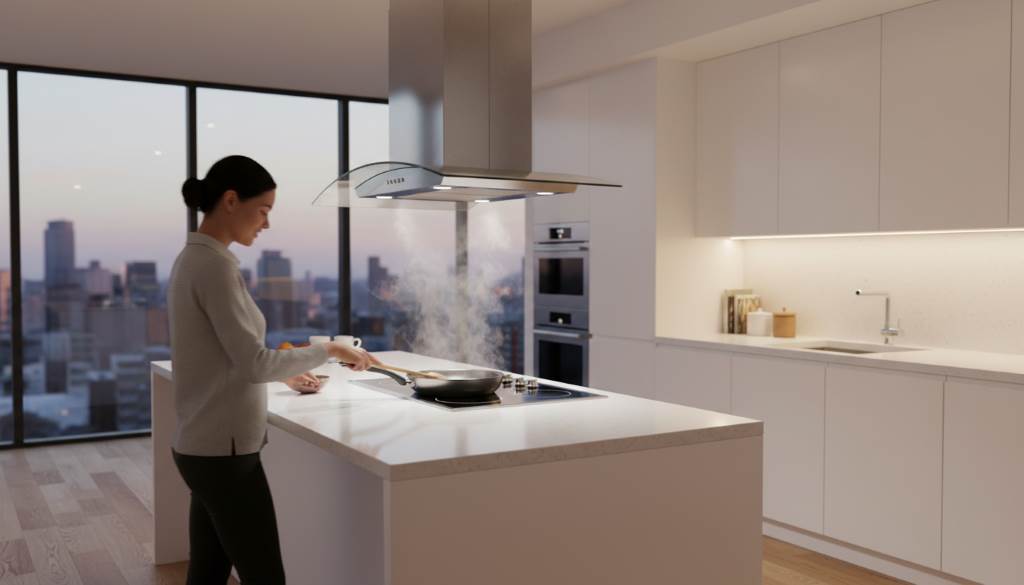
Picture this. You sear a steak on your island cooktop. Smoke fills the air. Without strong ventilation, that haze lingers for hours. Now imagine crisp, clean air instead. That’s the magic of proper suction power in an island range hood. Suction power measures how much air the hood pulls through your kitchen. Experts call it CFM, or cubic feet per minute. Higher CFM means better removal of smoke, odors, and grease. According to the U.S. Environmental Protection Agency, cooking can spike indoor PM2.5 levels up to three times higher than outdoor urban air without good ventilation. A study from Lawrence Berkeley National Laboratory shows effective range hoods cut nitrogen dioxide exposure by 50 percent during gas cooking. For top performance, consider a high suction range hood. This guide helps you find the right fit.
What Is Suction Power in Range Hoods?
Suction power defines a range hood’s ability to clear air. People often confuse it with noise or size. In reality, it focuses on airflow volume. CFM rates show this. For instance, a 300 CFM hood moves 300 cubic feet of air each minute. This pulls contaminants away from your cooking area. Moreover, strong suction keeps your kitchen fresh. Experts measure it under standard conditions. However, real world use varies. Factors like duct setup play a role. Additionally, suction captures particles from frying or boiling. Without enough, grease builds on surfaces. Therefore, understanding CFM helps you choose wisely. Range hoods with variable speeds adjust suction for light or heavy cooking. This flexibility saves energy too. Overall, suction power protects your home’s air quality.
Range hoods come in various styles. Island models hang from the ceiling. They serve open kitchens well. Unlike wall mounted ones, island hoods lack nearby surfaces to guide fumes. As a result, they demand more CFM. For example, a basic under cabinet hood might suffice with lower power. But island setups need robust airflow. Furthermore, suction removes heat and moisture. This prevents mold growth in humid areas. Studies confirm that proper ventilation reduces indoor pollutants. In fact, the Home Ventilating Institute rates hoods on CFM and efficiency. You can check these for reliable data. Consequently, informed choices lead to better kitchens.

Why Island Range Hoods Need More Suction
Island range hoods face unique challenges. They float above cooktops without walls nearby. Walls help direct smoke in other setups. Without them, fumes spread freely. Therefore, island hoods require extra suction to capture everything. Experts recommend adding 100 to 200 CFM for these models. This compensates for the open design. For instance, a 30 inch stove against a wall might need 250 CFM. But on an island, aim for 375 CFM or more. Additionally, airflow dynamics change in open spaces. Cross breezes from windows can scatter particles. Strong suction counters this. Moreover, island kitchens often host heavy cooking. Think grilling or stir frying. These activities produce more smoke. As a result, insufficient power leaves odors behind.
Research backs this need. A study from the International Journal of Ventilation notes island hoods lose efficiency without boundaries. They tested various models. Results showed 20 percent lower capture rates for island types at equal CFM. However, boosting suction restored performance. Furthermore, ceiling height affects suction. Taller rooms dilute fumes less quickly. You need more power to pull them up. In contrast, compact spaces benefit from natural containment. But island setups rarely offer that. Consequently, homeowners overlook this factor. They end up with hazy kitchens. To avoid disappointment, factor in the island’s isolation. This ensures clean air during meals.
Key Factors That Determine Your CFM Needs
Several elements shape your CFM requirements. First, consider stove size. Wider cooktops generate more fumes. Measure in inches. Then apply the rule of 150 CFM per foot for islands. For a 36 inch stove, that’s 450 CFM minimum. Additionally, heat output matters. Gas stoves produce higher BTUs. Divide total BTUs by 100 for CFM needs. A 50,000 BTU stove calls for 500 CFM. Moreover, kitchen volume influences airflow. Calculate length times width times height. Divide by four. This gives baseline ventilation. Take the highest number from these methods.
Cooking habits play a big role too. Frequent frying demands more suction. Light steaming needs less. For example, Asian cuisine often involves high heat woks. This boosts pollutant levels. Therefore, avid cooks should add 200 CFM extra. In addition, duct length impacts performance. Long runs create resistance. Short, straight ducts work best. If yours twists, increase CFM by 20 percent. Furthermore, hood design affects efficiency. Deeper models capture better. Aim for ones covering all burners. Research from ASHRAE shows shape boosts capture by 15 percent.
Air currents add complexity. Open floor plans allow drafts. These push fumes away from the hood. To counter, select higher CFM. Also, makeup air systems help. They replace exhausted air. Without them, suction drops. Studies indicate backpressure reduces flow by 50 percent in tight homes. Consequently, assess your space fully. Local climate matters too. Humid areas need more power to handle steam. Dry regions focus on dust. Overall, these factors guide precise choices.
How to Calculate the Right CFM for Your Island Hood
Start with basic measurements. Grab a tape measure. Note your stove’s width. For islands, use 150 CFM per linear foot. A 30 inch stove equals 2.5 feet. Multiply by 150. You get 375 CFM. This covers surface area. Next, check BTU rating. Find it in your manual. Divide by 100. A 60,000 BTU unit needs 600 CFM. Compare to the width calculation. Pick the larger one.
Now factor kitchen size. Measure room dimensions. Length by width by height. Say 10 by 12 by 8 feet. That’s 960 cubic feet. Divide by four. Result is 240 CFM. But for islands, add extra. Boost by 150 CFM. Now it’s 390. Again, select the highest from all. Additionally, adjust for cooking style. Heavy users add 100 CFM. Light ones subtract 50. For example, a family that grills weekly ups the total.
Consider duct setup. Short ducts under 10 feet need no change. Longer ones add 25 CFM per elbow bend. A 20 foot run with two turns means plus 50 CFM. Research from Broan NuTone confirms this. They tested various paths. Straight lines performed best. Moreover, ceiling height over 9 feet requires more. Add 50 CFM per extra foot. This pulls fumes upward effectively.
Put it all together. Suppose a 36 inch gas stove at 40,000 BTU in a 200 square foot kitchen. Width calc: 450 CFM. BTU: 400. Volume: 500 divided by four is 125. Highest is 450. Add 150 for island. Total 600 CFM. This ensures optimal ventilation.
Benefits of Choosing the Right Suction Power
Proper suction transforms your kitchen. It clears smoke fast. No more coughing during dinner prep. Additionally, it reduces grease buildup. Surfaces stay cleaner longer. This saves scrubbing time. Moreover, strong airflow removes odors. Fish or curry smells vanish quickly. Your home feels fresher.
Health gains stand out. Cooking releases fine particles. These irritate lungs. Effective hoods cut PM2.5 by 40 percent, per a Nature study. Nitrogen dioxide drops too. Gas users benefit most. Research from RMI shows ventilation halves pollutant exposure. Consequently, families breathe easier. Asthma risks decline.
Energy efficiency improves. Right CFM avoids overuse. Variable speeds match needs. This lowers utility bills. Furthermore, better air quality means less AC strain. Filters last longer. Overall, the right power enhances daily life.
Related:
Stay in Budget with These Kitchen Refurb Ideas
From Concept to Completion: Seamless Kitchen Renovation Solutions
Common Mistakes When Selecting Suction Power
Many people underestimate CFM. They pick low for quiet operation. But weak suction leaves haze. Smoke alarms trigger often. Instead, balance noise with power. Modern hoods offer quiet high speeds.
Others ignore duct issues. Long, narrow ducts choke flow. A 600 CFM hood drops to 400 effective. Check sizing first. Use 8 inch ducts for best results. Additionally, improper height hurts. Too high misses fumes. Aim 30 inches above cooktop.
Forgetting cooking habits causes problems. Casual cooks skimp on power. Then heavy meals overwhelm. Assess routines honestly. Moreover, skipping maintenance clogs filters. Suction fades over time. Clean regularly for peak performance.
Latest Research on Range Hood Effectiveness
Recent studies highlight advances. A 2025 ScienceDirect paper introduces swirling flow hoods. These achieve 94 percent capture efficiency. They use less air than traditional models. This saves energy while cleaning better.
Another from Nature in 2024 tests automated systems. They reduce PM2.5 by 40 percent over manual use. Sensors trigger fans at pollution spikes. This smart approach boosts air quality.
Research from ASHRAE focuses on capture efficiency. They built test chambers per new standards. Findings show deep hoods outperform shallow ones by 15 percent. Variable speeds add flexibility.
A MDPI study examines fresh air integration. Turning it on cuts air age from 469 to 95 seconds. Efficiency jumps to 82 percent. This quantifies ventilation’s impact.
Overall, science pushes for smarter designs. These improve health and efficiency.
Tips to Maximize Your Hood’s Performance
Use back burners more. They align better with hood capture. Front ones let fumes escape. This simple shift boosts efficiency by 20 percent.
Keep height optimal. 24 to 30 inches above stove works best. Too low risks fire. Too high weakens pull. Measure carefully during install.
Clean filters monthly. Grease blocks airflow. Wash or replace as needed. This maintains suction.
Run the fan before cooking. Pre circulation captures early fumes. Continue after for full clear out.
Open windows sparingly. Drafts disrupt flow. Use makeup air instead. This balances pressure.
Choose vented over ductless. They remove pollutants outside. Recirculating filters help but less so.
Test suction regularly. Hold tissue near vents. Strong pull confirms function.
Conclusion
Suction power in island range hoods hinges on CFM calculations. Factor stove size, BTUs, and kitchen volume. Add extra for island designs. Consider cooking habits and ducts too. Proper choice clears air, boosts health, and eases cleaning. Recent studies confirm high efficiency cuts pollutants sharply. Avoid common pitfalls like underestimating needs. Maximize with smart use and maintenance. Now assess your setup. Pick the right hood today for a fresher kitchen tomorrow.
FAQs
FAQ 1: What does CFM stand for in range hoods?
CFM means cubic feet per minute. It measures air volume moved. Higher numbers indicate stronger suction for better ventilation.
FAQ 2: Do island hoods always need more CFM than wall models?
Yes. Island hoods lack wall support. They require 150 CFM per foot versus 100. This captures spreading fumes effectively.
FAQ 3: How does kitchen size affect suction needs?
Larger kitchens dilute fumes slower. Calculate volume and divide by four. Use this as a baseline minimum CFM.
FAQ 4: Can too much CFM be a problem?
Excess CFM pulls too much air. It causes backdrafts or noise. Balance with your needs to avoid issues.
FAQ 5: What improves hood capture efficiency?
Deeper designs and back burner use help. Proper height and clean filters boost performance too.
References


