
Most people spend more time comparing smartphones than the object that supports their neck for nearly 3,000 hours every year. Choosing the right Contour Pillow for Neck Pain Relief can reduce strain on the cervical spine, improve sleeping posture, and help prevent waking up with stiffness or headaches. The wrong pillow, however, can worsen discomfort, disrupt sleep quality, and lead to repeated purchases that waste money.
A contour pillow is specifically designed to support the natural curve of the neck while keeping the head and shoulders properly aligned. Unlike traditional pillows that flatten over time, a quality cervical pillow maintains consistent support throughout the night. For people struggling with neck stiffness, shoulder tension, poor sleep posture, or recurring morning pain, selecting the correct pillow can make a measurable difference.
The challenge is that the market is crowded with products claiming to be “orthopedic,” “ergonomic,” or “doctor recommended.” Many buyers end up spending hundreds of dollars on pillows that don’t match their sleeping position, body type, or comfort preferences. This guide explains exactly how to choose a neck pain relief pillow, avoid common buying mistakes, and get long-term value from your investment.
What Is a Contour Pillow and Why Does It Help Neck Pain?
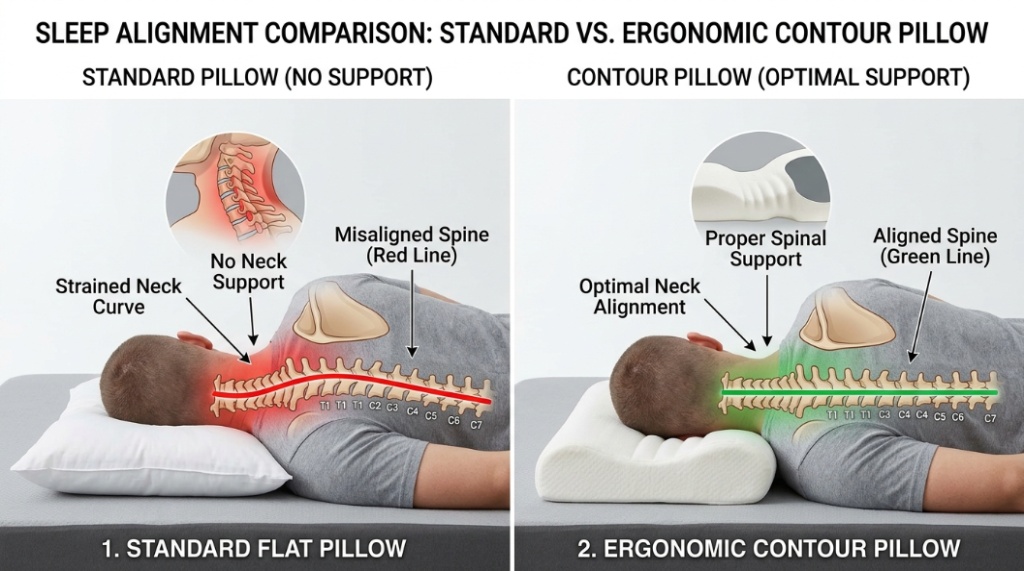
A contour pillow is an ergonomic pillow featuring raised edges and a central depression designed to support the neck’s natural curve and maintain spinal alignment during sleep.
Unlike standard pillows that compress unevenly, contour pillows provide targeted support to the cervical spine. The elevated sections cradle the neck while the lower center supports the head. This structure helps reduce pressure points and minimizes unnatural bending of the neck.
Proper alignment is important because poor sleeping posture can place additional stress on muscles, joints, ligaments, and spinal discs. A supportive orthopedic pillow helps keep the head in a neutral position throughout the night.
Many homeowners who prioritize comfort and wellness throughout their living spaces often apply the same thoughtful approach they use when learning how to create a more comfortable and functional home environment, recognizing that quality sleep is equally important for daily well-being.
- Supports natural cervical curvature
- Reduces neck muscle strain
- Improves spinal alignment
- Minimizes pressure points
- May reduce morning stiffness
- Helps improve sleep quality
How Do You Know If You Need a Cervical Pillow?
If you regularly wake up with neck pain, shoulder tightness, headaches, or stiffness, a cervical pillow may provide better support than a conventional pillow.
Many sleep-related neck problems originate from poor alignment. When the head rests too high or too low during sleep, muscles must work throughout the night to stabilize the neck.
Common Signs You May Need a Neck Pain Relief Pillow
- Morning neck stiffness
- Frequent tension headaches
- Shoulder discomfort after sleeping
- Numbness in arms or hands
- Restless sleep caused by discomfort
- Existing cervical spine issues
- Poor posture during daytime activities
People who spend long hours working at computers or looking down at mobile devices often experience forward-head posture, making proper nighttime support even more important.
Which Sleeping Position Requires Which Type of Contour Pillow?
Your sleeping position is one of the most important factors when selecting a contour pillow because different positions require different levels of support.
| Sleeping Position | Recommended Loft | Support Level | Best Pillow Type |
|---|---|---|---|
| Back Sleeper | Medium | Moderate Neck Support | Standard Contour Pillow |
| Side Sleeper | Medium to High | Strong Neck Support | High-Profile Cervical Pillow |
| Combination Sleeper | Medium | Adaptive Support | Dual-Height Contour Pillow |
| Stomach Sleeper | Low | Minimal Elevation | Specialized Low-Loft Pillow |
Why Side Sleepers Need More Height
Side sleepers have a larger gap between the shoulder and mattress. A higher contour section fills this space, keeping the spine aligned from head to lower back.
Why Back Sleepers Benefit from Medium Support
Back sleepers generally need moderate elevation that supports the neck without pushing the head forward excessively.
What Materials Are Best for an Orthopedic Pillow?
Memory foam remains the most popular material for contour pillows because it provides consistent support while adapting to individual anatomy.
Material quality directly affects durability, comfort, temperature regulation, and long-term performance.
Creating a relaxing sleep environment often complements other comfort-focused areas of the home, much like designing a welcoming space through thoughtful comfort-oriented interior choices that promote everyday well-being.
Memory Foam
- Excellent pressure relief
- Strong neck support
- Maintains shape well
- Available in multiple firmness levels
Latex Foam
- Naturally responsive
- Highly durable
- Good airflow
- Resistant to sagging
Hybrid Materials
- Combine foam and cooling technologies
- Improved temperature regulation
- Balanced comfort and support
Gel-Infused Foam
- Designed for hot sleepers
- Enhanced cooling properties
- Reduced heat retention
How Can You Avoid Wasting Money on the Wrong Pillow?
The best way to avoid wasting money is to match pillow height, firmness, material, and sleeping position before purchasing.
Many consumers buy based solely on marketing claims rather than personal sleep needs. This often results in disappointment and replacement costs.
Most Common Buying Mistakes
- Choosing the cheapest option available
- Ignoring sleeping position requirements
- Selecting incorrect loft height
- Buying solely based on online ratings
- Ignoring return policies
- Overlooking material quality
- Expecting instant results after one night
Smart Buying Checklist
- Identify primary sleep position
- Measure shoulder width if side sleeping
- Check firmness specifications
- Review warranty coverage
- Confirm trial period availability
- Verify certifications for foam quality
- Read verified customer reviews
For shoppers comparing different models and support levels, reviewing detailed evaluations of the best contour pillows for neck support and spinal alignment can help narrow down options before making a purchase.
What Features Should You Look for in a Neck Pain Relief Pillow?
The most important features include proper loft, ergonomic contouring, durable materials, breathability, and adjustable support.
Adjustable Loft
Adjustable pillows allow users to customize height according to body size and sleeping posture.
Ergonomic Design
Look for contours specifically designed to support cervical alignment rather than generic shaped foam.
Breathable Cover
High-quality covers improve airflow and help regulate temperature throughout the night.
Certifications
Certifications such as CertiPUR-US indicate that foam meets certain standards for emissions and material safety.
Removable Washable Cover
Easy maintenance improves hygiene and extends product lifespan.

How Long Does It Take for a Cervical Pillow to Work?
Most users need one to three weeks to fully adapt to a cervical pillow and experience noticeable improvements.
The body often requires time to adjust to corrected spinal positioning. Some people experience mild discomfort initially because muscles are adapting to a healthier alignment.
Typical Adjustment Timeline
- Days 1–3: Initial adaptation period
- Week 1: Improved awareness of posture
- Weeks 2–3: Reduced stiffness and discomfort
- Weeks 4+: Consistent support benefits
If significant discomfort persists beyond several weeks, pillow height or firmness may be inappropriate for your body type.
Can an Orthopedic Pillow Replace Medical Treatment?
No. An orthopedic pillow can support spinal alignment and improve sleep comfort, but it does not replace professional medical evaluation or treatment.
Neck pain can result from multiple causes, including muscle strain, arthritis, disc issues, nerve compression, injuries, or chronic posture problems. A supportive pillow may reduce symptoms but should not be viewed as a cure.
Persistent pain, numbness, weakness, or radiating symptoms should be assessed by a qualified healthcare professional.
What Makes a High-Quality Contour Pillow Different from a Cheap One?
Higher-quality contour pillows maintain consistent support, retain shape longer, use better materials, and provide superior pressure distribution.
| Feature | Budget Pillow | Premium Pillow |
|---|---|---|
| Shape Retention | Limited | Long-lasting |
| Foam Density | Lower | Higher |
| Neck Support | Inconsistent | Targeted Support |
| Durability | 1–2 Years | 3–5+ Years |
| Cooling Features | Minimal | Advanced Ventilation |
| Warranty Coverage | Limited | Extended Protection |
While premium models cost more initially, they often provide better long-term value because they require less frequent replacement.
Conclusion: How Can You Choose the Best Contour Pillow Without Overspending?
The right contour pillow balances support, comfort, durability, and proper spinal alignment. Rather than focusing solely on price or marketing claims, evaluate your sleeping position, preferred firmness, neck support requirements, and material quality.
A properly selected cervical pillow can help reduce morning stiffness, improve posture during sleep, and enhance overall comfort. The key is finding a model designed specifically for your body type and sleeping habits rather than following generic recommendations.
Just as homeowners research products carefully before making comfort-focused home improvements through expert lifestyle and design resources, such as practical home comfort planning ideas, choosing the right orthopedic pillow deserves the same thoughtful consideration.
Invest time in evaluating support features, trial periods, and construction quality. A well-chosen neck pain relief pillow can provide years of better sleep and may save significant money by preventing repeated purchases of unsuitable alternatives.
Frequently Asked Questions (FAQ)
Is a contour pillow good for chronic neck pain?
Yes. A contour pillow may help reduce chronic neck discomfort by improving cervical alignment and decreasing muscle strain during sleep. Results vary depending on the underlying cause of pain.
What firmness is best for a neck pain relief pillow?
Medium to medium-firm support works best for most people because it maintains spinal alignment while remaining comfortable throughout the night.
Are cervical pillows suitable for side sleepers?
Yes. Side sleepers often benefit significantly from cervical pillows because they help fill the space between the shoulder and head, maintaining proper alignment.
How often should you replace an orthopedic pillow?
Most quality orthopedic pillows should be replaced every three to five years, depending on material quality, usage frequency, and visible signs of wear.
Can a contour pillow help with tension headaches?
It may help. Poor neck alignment can contribute to muscle tension that triggers headaches. Improved support may reduce strain and associated symptoms.
Do doctors recommend cervical pillows?
Many healthcare professionals recommend cervical pillows for individuals experiencing posture-related neck discomfort because they support neutral spinal positioning during sleep.
Can a contour pillow improve sleep quality?
Yes. Better support often leads to fewer nighttime position changes, reduced discomfort, and improved sleep continuity, which may enhance overall sleep quality.