Phoenix plant owners face unique challenges because the desert climate dries out soil much faster than in many other cities. According to the National Weather Service, Phoenix records more than 300 sunny days each year, which increases indoor evaporation and soil compaction. In addition, a University of Arizona study found that container plants in hot climates may require watering nearly twice as often during peak summer months. Many local gardeners now prefer airy and moisture-balanced soil blends for healthier roots. Some plant lovers even experiment with a homemade chunky soil mix for monstera to improve drainage and airflow indoors.
Why Soil Matters for Plants in Phoenix
Phoenix has extremely dry air and long periods of intense heat. Therefore, standard potting soil often becomes compacted and dusty very quickly. Plants struggle when roots cannot access enough oxygen or moisture. Healthy soil creates balance between drainage and water retention.
Indoor plants in Arizona also face extra stress from air conditioning systems. Cool indoor air removes humidity and speeds up soil drying in many homes. As a result, plant owners must choose mixes that support stable moisture levels. Proper soil keeps roots healthy even during extreme summer temperatures.
Many beginners focus only on watering schedules. However, soil quality often causes more problems than watering habits alone. Poor soil traps salts and minerals that build up over time. Repotting with the right mix helps plants recover faster and grow stronger.
Signs Your Plant Needs Repotting
Roots growing through drainage holes usually signal that a plant needs a larger container. In many cases, the soil dries within a single day after watering. This issue happens because crowded roots absorb moisture too quickly. Repotting gives the roots more room to spread.
Plants with yellowing leaves may also suffer from old compacted soil. Although people often blame watering mistakes, exhausted soil can limit nutrient absorption. Fresh soil restores airflow and improves nutrient availability. Consequently, many plants regain healthy leaf color within weeks.
Another common sign is slow growth during the active growing season. Plants should produce new leaves in spring and summer. If growth suddenly stops, the roots may lack oxygen or space. Repotting can quickly improve root health and overall vigor.
Best Soil Types for Phoenix Plant Owners
Fast-Draining Potting Mixes
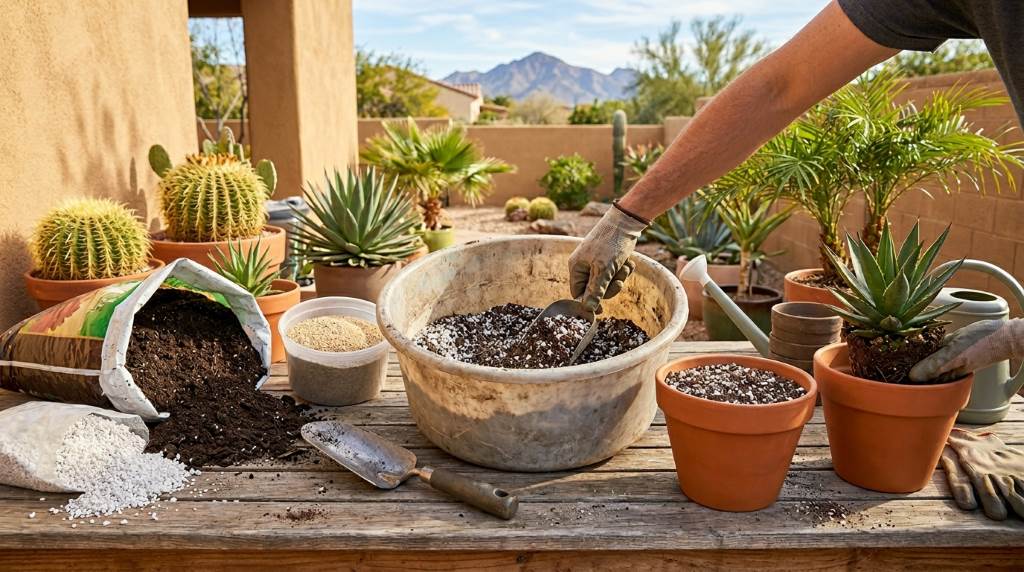
Fast-draining mixes work especially well in Arizona homes. These blends usually contain perlite, bark, and coco coir for improved airflow. They prevent water from sitting around roots for too long. At the same time, they still hold enough moisture for healthy growth.
Succulents and cacti thrive in gritty soil with excellent drainage. Phoenix residents often grow these plants because they tolerate desert conditions well. Adding pumice or coarse sand improves water flow significantly. This setup helps prevent root rot during humid monsoon weeks.
Tropical houseplants require a slightly different balance. They enjoy moisture retention without soggy conditions. Therefore, many gardeners combine standard potting soil with orchid bark and perlite. This blend supports both hydration and root aeration.
Organic Soil Options
Organic soil blends improve long-term soil health naturally. Compost, worm castings, and coconut coir provide steady nutrients for container plants. Moreover, organic ingredients improve moisture retention during hot weather. Many Phoenix gardeners prefer organic mixes because they reduce chemical buildup.
Peat-free mixes also continue gaining popularity in Arizona. Coconut coir serves as a sustainable alternative that retains water efficiently. Additionally, coir resists compaction better than some traditional materials. This feature helps plants survive the region’s intense heat.
Essential Ingredients for a Quality Repotting Mix
A successful soil mix usually contains several key components. Each ingredient plays a specific role in drainage, moisture control, or aeration. Combining them properly creates a healthier growing environment. Balanced mixes help plants adapt after repotting.
Common ingredients include:
- Perlite for airflow and drainage
- Coconut coir for moisture retention
- Orchid bark for chunky texture
- Compost for natural nutrients
- Pumice for long-lasting drainage
- Activated charcoal for odor and toxin control
Phoenix gardeners often customize these ingredients based on plant type. For example, snake plants prefer more grit and less moisture retention. Meanwhile, pothos and philodendrons enjoy slightly richer soil. Matching the soil to the plant improves long-term success.
Step-by-Step Repotting Guide
Prepare the New Pot
Choose a container that is one or two inches larger than the current pot. Oversized containers can hold too much moisture around the roots. Drainage holes are essential for preventing standing water. Terracotta pots also help soil dry more evenly in Phoenix homes.
Clean the new container before use to remove dust or bacteria. Warm water and mild soap usually work well for this task. After cleaning, allow the pot to dry completely. This simple step protects vulnerable roots from contamination.
Remove the Plant Carefully
Water the plant lightly before repotting to reduce root stress. Gently squeeze the container sides to loosen compacted soil. Then tilt the plant slowly while supporting the base with your hand. Avoid pulling directly on stems or leaves.
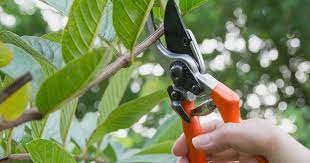
Inspect the roots once the plant is removed. Healthy roots usually appear white or light tan in color. Dark, mushy roots often indicate rot and should be trimmed away. Clean pruning scissors help prevent disease spread during this process.
Add Fresh Soil
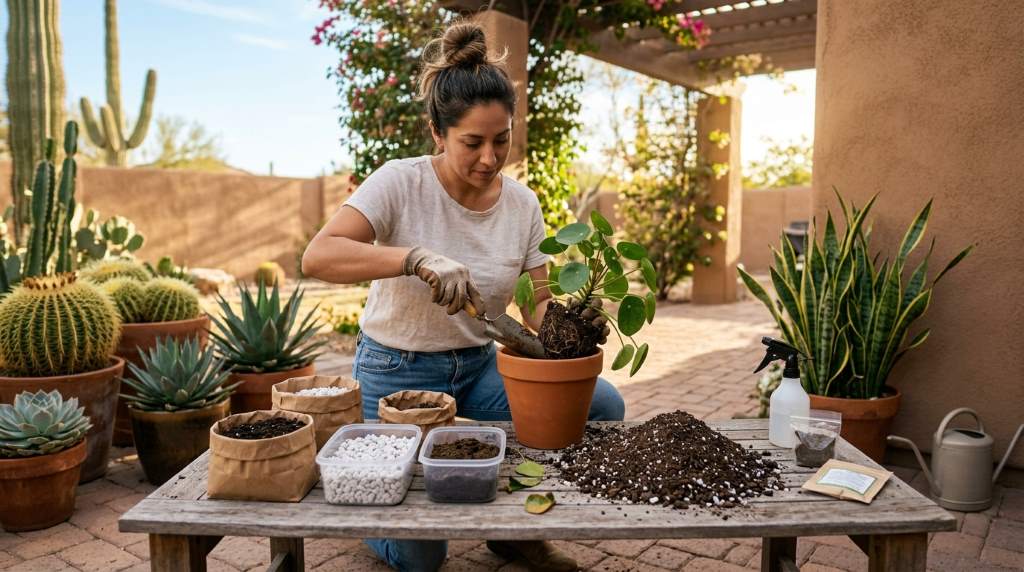
Place a small layer of fresh soil at the bottom of the new pot. Position the plant so the root ball sits slightly below the rim. Fill the sides evenly with soil while gently pressing to remove air pockets. Avoid packing the soil too tightly.
Water the plant lightly after repotting to settle the mix naturally. However, avoid soaking the soil immediately. Plants need time to recover from root disturbance. Moderate moisture encourages healthy adjustment without causing stress.
Common Repotting Mistakes to Avoid
Many people repot plants during extreme summer heat. Unfortunately, high temperatures increase transplant shock significantly. Spring and early fall usually provide safer conditions in Phoenix. Cooler temperatures help roots recover more efficiently.
Using dense garden soil indoors also causes major problems. Outdoor soil often compacts inside containers and limits airflow. In addition, it may introduce pests or fungal issues. Container-specific mixes remain the safest choice for indoor plants.
Overwatering after repotting is another common mistake. Fresh soil retains moisture differently than old compacted soil. Therefore, plants may need less water during the first few weeks. Checking soil moisture before watering prevents root damage.
Soil Care Tips for Arizona’s Climate
Phoenix water often contains minerals that accumulate in potting soil over time. Salt buildup creates white crusts on the soil surface and pot edges. Flushing containers with filtered water every few months helps reduce these deposits. Healthy soil stays loose and breathable longer.
Humidity levels inside homes can also affect soil performance. Many Arizona homes stay very dry because of air conditioning systems. Using humidity trays or small humidifiers benefits tropical plants significantly. Better humidity slows rapid moisture loss from the soil.
Mulching indoor plants may sound unusual, yet it works surprisingly well in dry climates. Small bark pieces or decorative moss reduce evaporation from the soil surface. Consequently, plants maintain more stable moisture between waterings. This technique helps reduce stress during heat waves.
Best Plants for Easy Soil Maintenance in Phoenix
Some plants adapt especially well to Arizona’s climate and indoor conditions. These varieties typically require less frequent repotting and simpler soil care. Beginners often succeed faster with hardy species. Low-maintenance plants also tolerate occasional watering mistakes.
Popular choices include:
- Snake plants
- ZZ plants
- Aloe vera
- Pothos
- Jade plants
- Rubber plants
Succulents remain especially popular among Phoenix residents because they thrive in dry environments. Their soil needs are straightforward and easy to manage. Meanwhile, pothos and philodendrons offer lush greenery with moderate maintenance. Choosing resilient plants simplifies long-term care.
Seasonal Repotting Advice for Phoenix Gardeners
Spring is usually the best season for repotting indoor plants in Arizona. Plants enter active growth during this period and recover quickly from root disturbance. Moderate temperatures also reduce moisture stress. Most gardeners complete repotting before summer heat arrives.
Summer repotting requires extra caution because temperatures rise rapidly in Phoenix. If repotting becomes necessary, keep plants indoors away from direct sunlight. Extra humidity can also reduce transplant stress during recovery. Monitoring soil moisture carefully becomes essential.
Fall provides another excellent repotting window for many houseplants. Cooler evenings help roots establish comfortably before winter dormancy. Additionally, lower evaporation rates improve moisture control. Many experienced gardeners prefer fall for larger tropical plants.
Winter repotting should remain limited unless absolutely necessary. Many plants grow slowly during cooler months and recover more gradually. However, emergency repotting may still help plants suffering from root rot or severe compaction. Gentle handling becomes especially important during winter.
Choosing Between Store-Bought and DIY Soil Mixes
Store-bought potting mixes offer convenience and consistency for beginners. Most quality blends already contain balanced drainage materials and nutrients. Additionally, commercial mixes save time during repotting projects. Many Phoenix gardeners start with pre-made blends before customizing their own.
DIY soil mixes provide more flexibility for specific plant needs. Plant owners can adjust ingredients based on watering habits and indoor humidity levels. For example, adding more bark improves airflow for tropical plants. Extra pumice benefits succulents and desert species.
Cost also influences this decision for many households. Homemade mixes often become more affordable when repotting multiple plants regularly. Buying ingredients in bulk reduces long-term gardening expenses. Nevertheless, beginners may find ready-made mixes easier to manage initially.
Conclusion
Repotting plants successfully in Phoenix requires the right soil, careful timing, and climate awareness. Desert heat and dry indoor air create unique challenges that standard soil often cannot handle alone. Fortunately, well-balanced potting mixes improve drainage, airflow, and moisture retention for healthier plants. Simple adjustments such as using chunky ingredients or flushing salts regularly can make a major difference.
Start by evaluating your current plant soil and repot any root-bound containers before peak summer temperatures arrive. Healthy soil supports stronger roots, greener leaves, and easier plant care throughout the year. With the right approach, Phoenix plant owners can enjoy thriving indoor gardens even in extreme desert conditions.
FAQs
How often should indoor plants be repotted in Phoenix?
Most indoor plants benefit from repotting every one to two years depending on growth speed.
What soil works best for succulents in Arizona?
Fast-draining cactus soil with pumice or coarse sand works best for succulents.
Can I use garden soil for indoor plants?
No, garden soil usually compacts too heavily and may introduce pests indoors.
When is the best time to repot plants in Phoenix?
Spring and early fall are the safest seasons for repotting in Arizona.
Why does my potting soil dry so fast in Phoenix?
Low humidity, strong sunlight, and indoor air conditioning increase evaporation quickly.
Related Reads
Discover: Spring Garden Refresh Checklist for Denver, CO Homeowners
Read Also: How to Create a Low-Maintenance Garden at Home: Effortless Beauty for Busy Lives
Explore: Pinkish Red Threads in Yellow Grass