
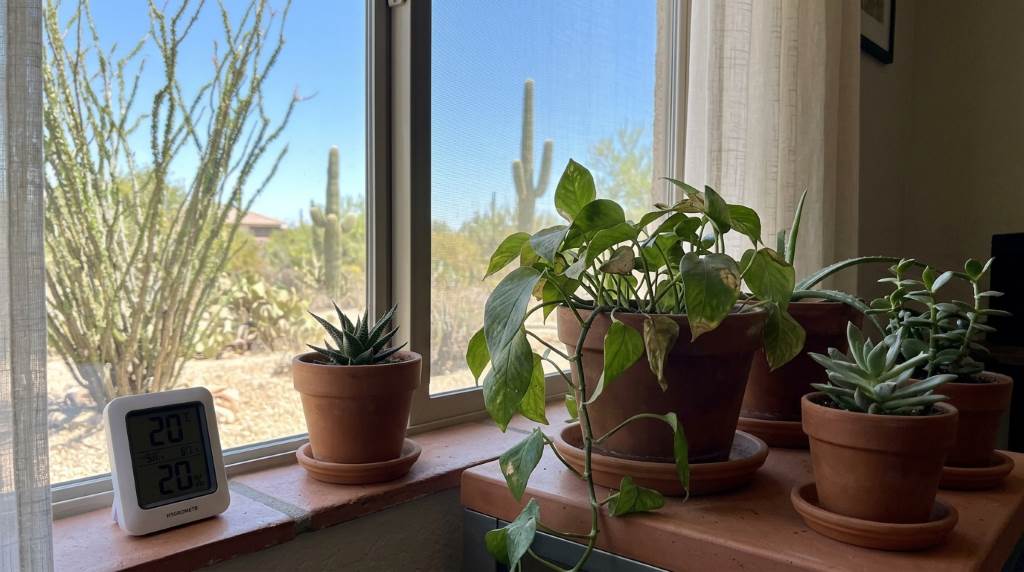
Phoenix homeowners face unique challenges when caring for indoor plants, especially during long dry seasons. Low humidity levels can fall below 20%, while indoor air often becomes even drier because of air conditioning systems. As a result, many popular houseplants struggle to maintain healthy growth and vibrant foliage. Fortunately, several practical strategies can help. Many residents also support plant nutrition with water soluble plant food for houseplants, which helps plants receive nutrients more efficiently while adapting to Arizona’s demanding indoor environment.
Understanding Phoenix’s Dry Climate and Its Impact on Houseplants
Phoenix experiences an arid desert climate for most of the year. Humidity levels remain consistently low, especially during late spring and summer. Consequently, indoor plants lose moisture through their leaves much faster. This rapid water loss can slow growth and weaken plant health.
Many tropical houseplants naturally thrive in humid environments. However, dry indoor air creates stress that often causes leaf browning and curling. Furthermore, plants may stop producing new growth when moisture becomes limited. Recognizing these signs early helps homeowners take corrective action.
Air conditioning systems add another challenge. While they make homes comfortable, they also remove moisture from indoor air. Therefore, plants located near vents often experience even greater stress. Strategic placement becomes essential for maintaining healthy growth.
Choosing Plants That Thrive in Low Humidity
One of the smartest strategies involves selecting plants that naturally tolerate dry conditions. Certain species adapt better to Phoenix homes and require less intervention. As a result, homeowners enjoy healthier plants with less maintenance. Proper plant selection often determines long-term success.
Best Indoor Plants for Dry Seasons
- Snake Plant
- ZZ Plant
- Aloe Vera
- Jade Plant
- Ponytail Palm
- Cast Iron Plant
- Rubber Plant
These plants store water efficiently and tolerate lower humidity levels. Moreover, they can withstand occasional watering mistakes. Many Phoenix homeowners start with these resilient options before experimenting with more demanding species. Their adaptability makes them excellent choices for beginners.
Creating a Microclimate for Indoor Plants
Successful indoor gardeners often create small humidity zones around their plants. This approach allows plants to benefit from localized moisture without changing conditions throughout the entire home. Consequently, homeowners save energy while improving plant health. Small adjustments can produce significant results.
Grouping plants together remains one of the simplest methods. As plants release moisture through transpiration, nearby plants benefit from the increased humidity. Additionally, clustered plants create a more stable environment. This natural process mimics conditions found in dense tropical forests.
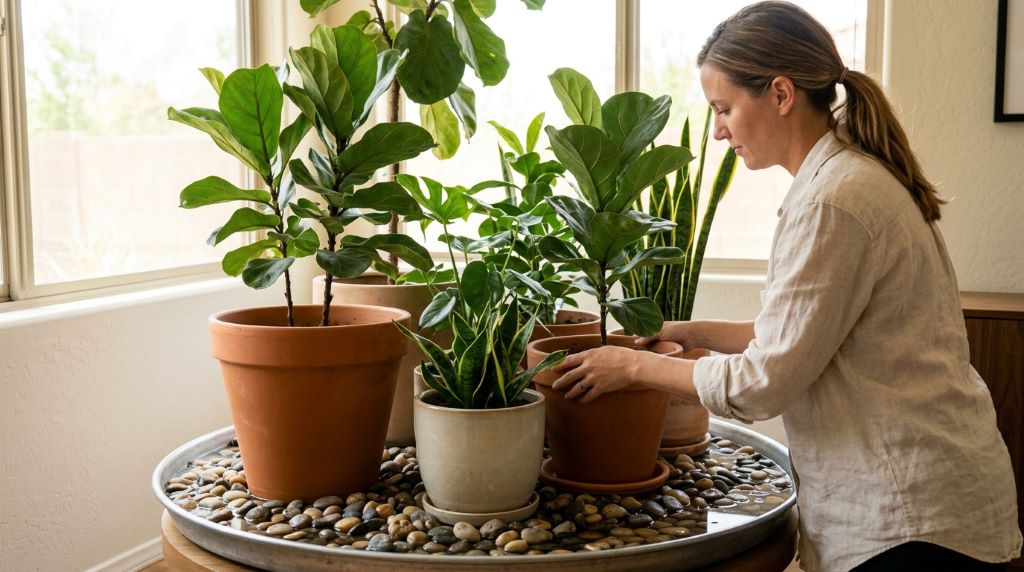
Humidity trays also work well in dry climates. Homeowners place pebbles in shallow trays and add water below the pebble surface. Then they position plant containers on top. As water evaporates, surrounding humidity increases without saturating roots.
Using Humidifiers Effectively
Humidifiers offer one of the most reliable ways to support moisture-loving plants. They provide consistent humidity levels that many tropical species require. Furthermore, modern units allow precise control of indoor conditions. This solution often delivers noticeable improvements within weeks.
Most tropical houseplants prefer humidity levels between 40% and 60%. However, indoor air in Phoenix homes often remains far below that range. Therefore, a small room humidifier can significantly improve growing conditions. Consistency matters more than occasional humidity spikes.
Positioning also influences effectiveness. Homeowners should place humidifiers near plant groups rather than across the room. Additionally, maintaining clean equipment prevents mineral buildup and improves performance. Regular maintenance ensures lasting benefits.
Watering Strategies for Dry Conditions
Watering mistakes frequently occur during Phoenix’s dry seasons. Many people assume plants need constant watering because the air feels dry. However, excessive watering can damage roots and create separate health problems. Balanced watering practices support stronger growth.
Checking soil moisture before watering remains essential. Homeowners can insert a finger one or two inches into the soil to assess moisture levels. If the soil feels dry, watering becomes appropriate. Otherwise, waiting a few more days often benefits the plant.
Morning watering works particularly well in Phoenix homes. Plants absorb moisture efficiently during the day, and excess moisture evaporates gradually. Consequently, roots stay healthier and fungal issues become less likely. This simple timing adjustment can improve plant vitality.
Selecting the Right Soil Mix
Soil quality plays a major role in plant performance. Standard potting mixes sometimes dry too quickly under desert conditions. Therefore, homeowners often modify soil blends to improve moisture retention. Proper soil helps plants withstand environmental stress.
Adding coconut coir can increase water-holding capacity without creating soggy conditions. Likewise, high-quality compost improves both moisture retention and nutrient availability. These additions create a balanced growing environment. Plants often show stronger root development as a result.
At the same time, drainage remains important. Roots require oxygen as much as they need water. Therefore, homeowners should avoid dense soil mixtures that stay saturated for long periods. Balance remains the key to healthy growth.
The Role of Light During Dry Seasons
Sunlight affects both growth and water consumption. Plants exposed to intense direct sunlight lose moisture more rapidly. Consequently, positioning plants carefully can reduce stress during dry months. Light management often complements watering strategies.
East-facing windows frequently provide ideal conditions. They offer gentle morning sunlight without the harsh afternoon heat common in Phoenix. Furthermore, filtered light protects sensitive foliage from damage. Many tropical plants thrive in these locations.
Some homeowners use sheer curtains to diffuse strong sunlight. This technique reduces leaf scorch while maintaining adequate brightness. Additionally, plants continue photosynthesis without excessive moisture loss. The result is more consistent growth throughout the season.
An Uncommon Yet Effective Strategy: Monitoring Indoor Air Pressure Zones
Many gardening blogs overlook the influence of indoor air pressure zones. However, this factor can significantly affect plant moisture levels in Phoenix homes. Air movement patterns often develop because of HVAC systems and room layouts. Understanding these patterns creates a surprising advantage.
Plants placed near areas with constant airflow lose moisture much faster. Even when temperatures remain comfortable, moving air accelerates evaporation from leaves. Therefore, homeowners can improve growth by identifying and avoiding high-airflow zones. Small location changes often produce noticeable results.
A simple tissue test helps reveal these hidden air currents. Homeowners place a lightweight tissue near potential plant locations and observe movement. If the tissue consistently shifts, air circulation may be excessive. Choosing calmer locations helps preserve plant moisture naturally.
Feeding Indoor Plants for Strong Growth
Dry conditions can slow nutrient uptake. Therefore, proper feeding becomes increasingly important during challenging seasons. Healthy plants develop stronger roots and greater resilience when they receive balanced nutrition. Fertilization supports long-term success.
Most houseplants benefit from regular feeding during active growth periods. However, overfertilization can damage roots and increase stress. Following label directions helps prevent problems. Consistent moderation usually produces the best results.
Plant nutrition also works alongside other care practices. When watering, humidity, and light remain balanced, nutrients support vigorous growth more effectively. Consequently, homeowners often notice fuller foliage and stronger stems. Healthy plants respond positively to comprehensive care.
Preventing Dust Buildup on Leaves
Desert environments often introduce more dust into homes. Over time, dust accumulates on plant leaves and blocks sunlight. As a result, photosynthesis becomes less efficient. Regular cleaning helps plants perform at their best.
Wiping leaves with a damp cloth removes dust safely. Additionally, clean leaves absorb light more effectively and appear healthier. This simple maintenance task requires little time. Yet it can contribute significantly to plant performance.
Some homeowners combine leaf cleaning with routine inspections. During this process, they check for pests, discoloration, or damage. Early detection allows faster intervention. Consequently, plants remain healthier throughout the dry season.
Supporting Plant Health Through Household Habits
Indoor gardening often connects with broader home management practices. For example, homeowners who enjoy benefits of cooking at home may notice slightly higher kitchen humidity levels that benefit nearby plants. Steam from regular meal preparation can create temporary moisture boosts. Therefore, some plants perform well in carefully selected kitchen spaces.
Likewise, efficient appliances reduce excess heat generation inside the home. Residents researching versatile blenders under 800w often prioritize energy-conscious living. Lower indoor heat helps maintain more stable growing conditions. Small environmental improvements can collectively support healthier plants.
Home gardening also inspires interest in edible plant varieties. People exploring cook white eggplant delicious meal ideas often become more engaged with plant care overall. This connection encourages greater observation and maintenance. As a result, indoor gardens frequently receive more consistent attention.
Seasonal Maintenance Checklist
- Check soil moisture weekly.
- Monitor humidity levels with a hygrometer.
- Clean leaves every two to three weeks.
- Rotate plants for balanced light exposure.
- Inspect for pests regularly.
- Adjust watering based on seasonal changes.
- Keep plants away from strong air vents.
Following a simple checklist prevents many common issues. Moreover, routine care helps homeowners spot problems before they become serious. Consistency often matters more than complicated techniques. Healthy habits create healthy plants.
Conclusion
Homeowners in Phoenix, AZ can successfully grow thriving indoor plants despite challenging dry seasons. Strategic plant selection, proper watering, humidity management, and thoughtful placement all contribute to healthier growth. Furthermore, understanding overlooked factors such as indoor airflow patterns provides an extra advantage. By applying these practical techniques consistently, anyone can create a flourishing indoor garden. Start implementing these strategies today and enjoy stronger, greener, and more resilient houseplants year-round.
Frequently Asked Questions
How often should I water indoor plants during Phoenix’s dry season?
Water only when the top layer of soil feels dry to avoid overwatering.
Which indoor plants grow best in Phoenix homes?
Snake plants, ZZ plants, aloe vera, and jade plants perform exceptionally well.
Do indoor plants need a humidifier in Arizona?
Many tropical houseplants benefit greatly from added humidity provided by a humidifier.
Can air conditioning harm indoor plants?
Yes, constant airflow from vents can dry leaves and increase plant stress.
What humidity level is best for most houseplants?
Most common houseplants grow best when humidity stays between 40% and 60%.


