Low slope roofs leak in Houston mainly because heavy rain, slow drainage, heat, and aging membranes expose weak points quickly. Houston averages about 51.84 inches of rain annually, while one historic day produced 16.07 inches. That combination makes drainage failures especially costly. Therefore, homeowners should address flat roof water pooling repair before standing water reaches vulnerable seams or penetrations.
Key Takeaways
- Low slope roofs depend heavily on efficient drainage because gravity works slowly across shallow surfaces.
- Houston’s intense rainfall can overwhelm clogged drains, scuppers, gutters, and internal drainage systems.
- Standing water increases membrane stress and creates more opportunities for moisture intrusion.
- Roof penetrations, flashing, seams, and edge details often develop leaks before the main membrane.
- Houston’s heat accelerates material aging and can worsen existing cracks, blisters, and seam failures.
- Routine inspections can identify drainage and membrane problems before interior damage becomes extensive.
How Houston Weather Exposes Low Slope Roof Weaknesses
Houston gives low slope roofs a demanding operating environment throughout the year. Heavy thunderstorms can deliver large rainfall volumes within short periods. Consequently, even a properly designed drainage system can face severe temporary loading.
Heat adds another layer of stress during long summer periods. Roofing membranes repeatedly expand during intense sunlight and contract as temperatures fall. Over time, these movements can weaken seams, flashing, adhesives, and termination points.
Houston also experiences strong thunderstorms and tropical weather that can drive rain against vulnerable roof details. Wind-driven water can reach seams that normally remain protected during ordinary rainfall. Therefore, small installation defects can become active leak paths during severe weather.
Humidity creates another challenge because moisture remains present around roofing components for extended periods. Although humidity does not automatically cause leaks, it can accelerate deterioration when materials already contain defects. Regular inspections therefore matter more on shallow roofs than many owners expect.
Roof age also changes how weather affects the system. An older membrane may tolerate normal rainfall while struggling during repeated storms. Once materials lose flexibility, minor movement can create openings around seams and penetrations.
For homeowners researching roof tear-offs Mobile AL, the same principle applies locally. Different climates create different stresses, but neglected roof systems eventually expose their weakest details. Houston simply adds unusually demanding rainfall and heat to that equation.
Why Poor Drainage Causes So Many Low Slope Roof Leaks
Low slope roofs cannot shed water as quickly as steep roofs. Instead, they rely on carefully planned slopes, drains, scuppers, gutters, and overflow paths. When those components fail, water can remain on the membrane long after rainfall ends.
Standing water creates a persistent moisture source above the occupied space. Eventually, water can exploit seams, fasteners, penetrations, cracks, or damaged flashing. The resulting leak may appear far from the original drainage problem.
Clogged drains represent one of the simplest causes of ponding. Leaves, branches, sediment, and rooftop debris can restrict water movement after storms. Therefore, keeping drainage openings clear should become part of routine roof maintenance.
Drainage design also matters during roof installation or replacement. Installers must account for subtle surface depressions that can collect water repeatedly. Even a membrane without visible damage can deteriorate faster when the same area stays wet.
Houston property owners should also understand that ponding water adds weight to the roof structure. City guidance emphasizes positive drainage toward roof drains and minimizing localized ponding. This makes drainage performance a structural and waterproofing concern, not merely an appearance issue.
When researching questions about roofing materials, focus on compatibility with your roof’s slope and drainage design. A material that performs well elsewhere may still fail when installers ignore site-specific drainage conditions.
Roof Penetrations and Flashing Create Hidden Leak Paths
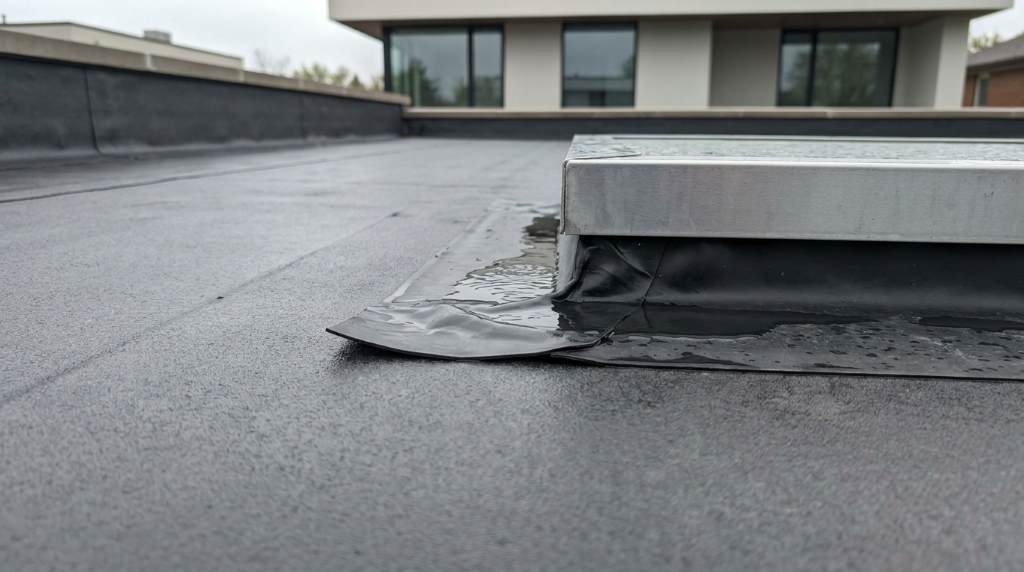
Many low slope roof leaks begin around penetrations rather than across the middle of the membrane. Plumbing vents, HVAC equipment, skylights, conduits, and mounting hardware all interrupt the waterproofing layer. Each opening therefore requires careful flashing and sealing.
Flashing protects transitions where water could otherwise enter beneath the membrane. Unfortunately, flashing can crack, separate, corrode, or lose adhesion as materials age. Once that protection fails, rainfall can enter through remarkably small openings.
HVAC equipment deserves particular attention on Houston buildings. Rooftop units create numerous penetrations while also producing concentrated service traffic. Technicians can accidentally damage membranes when they move equipment or carry tools across vulnerable surfaces.
Plumbing vents can develop problems around collars and flashing assemblies. Temperature changes can also move pipes independently from surrounding roofing materials. That movement eventually stresses seals that once appeared completely intact.
Fasteners deserve inspection as well, especially on mechanically attached roofing systems. Loose fasteners can create movement, membrane stress, and localized openings. Therefore, inspectors should examine attachment points rather than looking only for obvious holes.
Professional roofers often know where these details fail first. However, property owners can still identify warning signs during safe ground-level inspections. Look for cracked sealants, displaced flashing, visible rust, unusual staining, and recurring interior leaks.
How Houston Heat Damages Low Slope Roofing Materials
Houston’s intense sunlight can push roof surfaces to temperatures far above surrounding air temperatures. That heat repeatedly stresses membranes, coatings, adhesives, and flashing materials. Eventually, normal thermal movement can expose weak installation details.
Some roofing systems become less flexible as they age. Brittle materials cannot accommodate movement as effectively as newer materials. Consequently, cracks can develop around seams, corners, and penetrations.
Heat can also accelerate coating deterioration. Once protective coatings lose thickness or adhesion, ultraviolet exposure reaches underlying materials more aggressively. Regular maintenance can slow this process when professionals catch deterioration early.
Dark roof surfaces can absorb substantial solar energy throughout sunny Houston afternoons. This creates repeated thermal cycles that affect the entire roofing assembly. Therefore, material selection should consider local heat exposure rather than purchase price alone.
Insulation also influences roof performance. Poor insulation can increase temperature swings within the roofing assembly and occupied building. Meanwhile, trapped moisture can complicate inspections and create additional deterioration concerns.
Property owners should therefore treat heat-related deterioration as a gradual risk. A roof rarely transforms from healthy to leaking overnight without warning. Small cracks, surface changes, seam movement, and recurring repairs often provide earlier clues.
Installation Problems Can Cause Leaks Before Roof Aging
A low slope roof can fail prematurely when installers overlook small details during construction. Poor seam preparation, inadequate flashing, incorrect fastener placement, and insufficient drainage can create immediate vulnerabilities. Those defects may remain invisible until the first major storm.
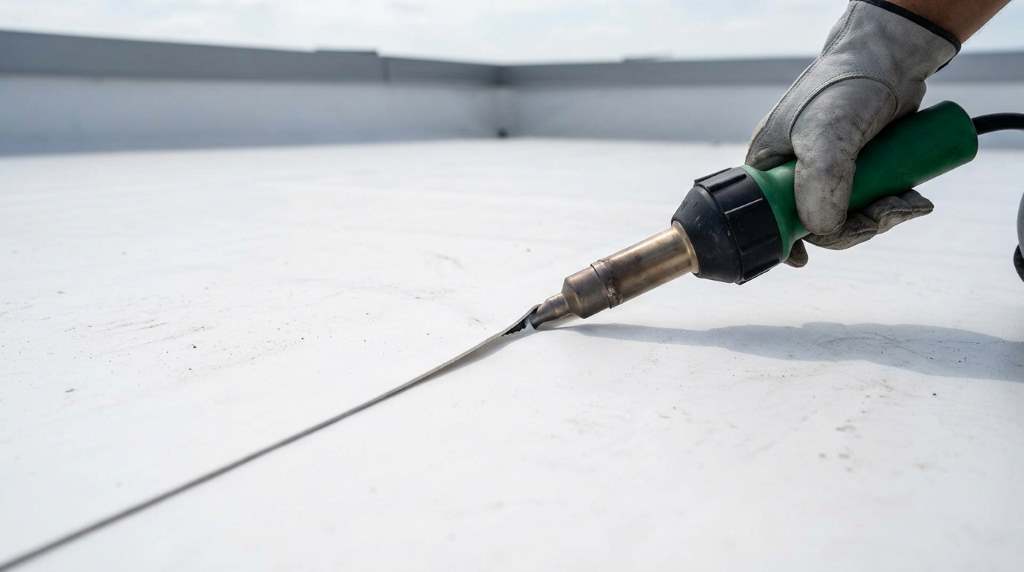
Membrane seams deserve especially careful installation. Contractors must follow manufacturer requirements for preparation, bonding, welding, or fastening. When workers rush those steps, water can eventually penetrate the weakest connection.
Roof edges also need precise detailing because wind and rain can attack perimeter components aggressively. Loose edge metal or poorly secured membranes can allow water beneath protective layers. Consequently, edge inspections should accompany every serious leak investigation.
Drain placement requires equal attention. Designers should avoid creating isolated low points that hold water after storms. Installers should also verify that drains remain accessible and function correctly before completing the project.
Repairs can create another installation problem when contractors apply incompatible materials. A patch may stop a leak temporarily while creating adhesion problems elsewhere. Therefore, repair materials should match the existing membrane and manufacturer requirements whenever possible.
When comparing repair approaches, useful roofing secrets pros can help explain why certain defects require more than surface patching. A durable repair addresses the failure mechanism instead of covering only visible damage.
How To Identify a Low Slope Roof Leak Early
Early detection can prevent a localized roof defect from becoming widespread interior damage. Start by watching for ceiling stains, peeling paint, damp insulation, and musty odors. However, never assume the visible stain marks the exact entry point.
Water can travel along decking, insulation, framing, and other building components before reaching the interior. Consequently, interior staining may appear several feet away from the actual roof defect. Professional leak tracing can help identify the original entry point.
Exterior warning signs can provide additional clues. Look for ponding water, damaged membrane surfaces, open seams, cracked flashing, blocked drains, and deteriorated sealants. These signs become especially important after heavy rainfall.
Property owners should document recurring leaks after every significant storm. Record the affected room, approximate location, rainfall intensity, and duration of leakage. This information can help roofing professionals narrow the investigation faster.
Do not walk on a wet roof without proper training and safety equipment. Low slope surfaces can become slippery, and hidden structural damage can increase fall risks. Instead, use ground-level observations whenever possible.
When Should You Repair or Replace a Low Slope Roof?
The correct solution depends on membrane condition, leak frequency, drainage performance, and remaining service life. A small isolated defect may require only targeted repair. Conversely, repeated failures across several areas can indicate broader system deterioration.
Multiple repairs within the same season deserve closer evaluation. Repeated leaks can indicate aging membranes, widespread seam failure, or persistent drainage problems. Continuing isolated repairs may cost more than addressing the underlying system.
Ponding also changes the repair decision. A contractor should determine why water collects before replacing damaged membrane sections. Otherwise, the same drainage problem may damage the new material.
Roof replacement may make sense when the membrane has widespread deterioration or extensive moisture damage. However, replacement should include drainage improvements when the existing layout contributes to failure. Otherwise, a new roof may inherit an old problem.
Coatings can sometimes extend service life when the existing substrate remains suitable. Yet coatings cannot correct every structural or drainage defect. A qualified inspection should determine whether coating, repair, restoration, or replacement makes technical sense.
A Practical Houston Low Slope Roof Maintenance Plan
A consistent maintenance plan can reduce unexpected leaks and extend roof service life. Start with inspections at least twice yearly and after major storms. Schedule additional evaluations when the roof approaches the end of its expected service life.
During each inspection, check the drainage system first. Remove debris from drains, scuppers, gutters, and strainers when conditions allow. Then examine the membrane, seams, flashing, penetrations, edges, and visible repair areas.
Keep rooftop equipment service areas organized and accessible. Technicians should avoid unnecessary traffic across exposed membrane surfaces. Protective walk pads can reduce damage around frequently accessed equipment.
Maintain nearby trees to limit debris accumulation on the roof. Trim branches that frequently drop leaves or scrape roof components. After storms, remove fallen branches promptly when safe access exists.
Keep maintenance records with photographs and repair dates. Documentation helps identify recurring problems and supports better replacement decisions. It also gives future contractors useful information about previous repairs and materials.
What To Do When Your Low Slope Roof Starts Leaking
First, protect interior belongings and place containers beneath active leaks. Then identify visible ceiling damage without assuming the ceiling location matches the roof entry point. Move valuables away from affected areas whenever practical.
Next, document the leak with photographs and notes. Record when the leak started and whether rainfall preceded it. This evidence can help a roofing professional distinguish drainage problems from isolated membrane failures.
Do not rely on interior sealants as a permanent roof repair. Caulking from inside the building rarely addresses the exterior waterproofing failure. Instead, arrange an exterior inspection as soon as conditions permit.
After inspection, ask the contractor to explain the cause rather than simply showing the damaged area. A useful diagnosis should identify the entry mechanism, contributing conditions, and recommended correction. This approach reduces the chance of repeated temporary repairs.
If severe weather caused the damage, inspect the entire roof rather than focusing only on the visible leak. Storms can create multiple weaknesses across membranes, flashing, and edge components. Early detection can prevent several separate repairs later.
Final Thoughts: Prevent Low Slope Roof Leaks Before They Spread
Low slope roofs leak in Houston when water, heat, movement, aging, or installation defects overwhelm the waterproofing system. The biggest risks usually involve drainage, seams, flashing, penetrations, and neglected maintenance. Fortunately, owners can reduce many of these risks through systematic inspections and timely repairs.
Do not wait for a ceiling stain to become your first maintenance warning. Have a qualified roofing professional inspect recurring ponding, damaged seams, deteriorated flashing, or repeated leaks. A proactive assessment can protect the roof structure, interior finishes, equipment, and long-term repair budget.
Frequently Asked Questions
Why do low slope roofs leak more easily?
Low slope roofs drain water more slowly, so drainage defects can keep moisture against vulnerable roofing components.
Does standing water always mean a low slope roof needs replacement?
No, standing water does not always require replacement, but professionals should identify and correct its drainage cause.
How often should a Houston low slope roof receive an inspection?
Inspect the roof at least twice yearly and again after major storms or significant weather events.
What part of a low slope roof usually leaks first?
Flashing, seams, penetrations, edges, and drainage areas often develop leaks before broad membrane surfaces fail.
Can a roof coating stop a low slope roof from leaking?
A coating can help suitable roofs, but it cannot reliably fix structural damage, failed drainage, or severe membrane deterioration.