
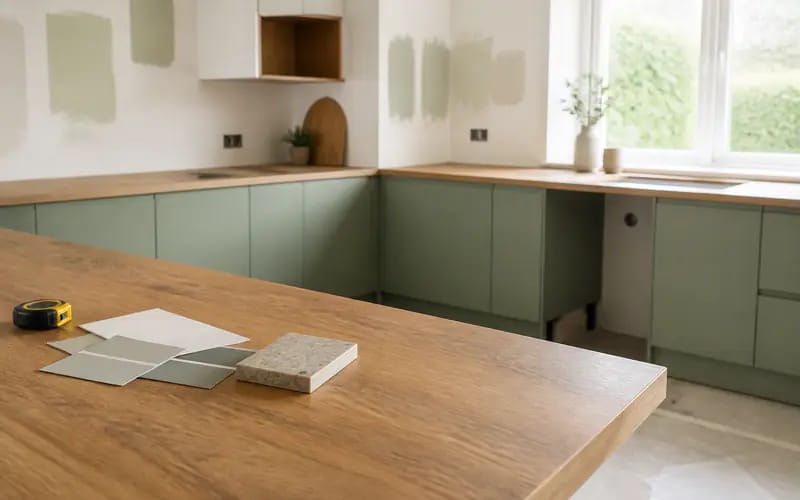
You will be in contact with your kitchen worktops more than any other part of your kitchen so it’s worth choosing one that is not only aesthetically pleasing but also durable enough to withstand the demands of everyday use. We look at the pros and cons of the most popular choices to help you choose.
Think About How You Use the Kitchen
Be honest about how you use your kitchen and what will happen on the work surfaces. If you are a busy kitchen with constant use of hot pans, sharp knives, daily baking and lots of chopping and slicing then you need a more robust work surface than a kitchen used for making the odd piece of toast and reheating some ready meals. Children doing their homework at the kitchen counter, families with a lot of children and entertainers will need to think about scratches, spills and heat marks on their work surfaces.
Laminate Worktops
Budget worktops usually cost from about £40/m for laminate up to £120+/m for higher quality laminates. Laminate work surfaces are extremely popular and with good reason as there are hundreds of colours and designs to choose from to create wooden or stone effect worktops. The main problem with laminate work surfaces is that they are easily damaged by hot surfaces and sharp objects such as knives. Therefore, they are ideal for short-term use in kitchens such as rental properties, annexe kitchens or for those with very small budgets who will use boards and trivets.
Solid Wood Worktops
Solid Wood Worktops include Oak, Beech and Walnut worktops. A very warm and attractive kitchen material that develops character as it gets older. Many scratches can be sanded out and re-oiled. However, worktops made of wood require regular maintenance in the form of oiling every few months or so. Due to constant exposure to water and heat, areas around sinks and hobs can be particularly prone to problems. As a result, many people opt for a dedicated heat resistant worktop section, typically made from stainless steel, near their cooker.
Quartz and Engineered Stone
Consisting of crushed stone bound together with resin, quartz surfaces offer consistent patterns which are very different from natural stone, which can vary from slab to slab. As a non-porous material, quartz surfaces do not stain from wine, oil, coffee etc, and as they do not require sealing, they are one of the lowest maintenance work surfaces available. However, the surfaces can be damaged by heat, and it is wise to use a trivet when placing hot pans directly onto the work surface.
Granite Worktops
The heat-resistance of granite means that hot pans are no problem, unlike with quartz or laminate worktops. It’s also extremely hard-wearing, so chopping, scraping and other daily wear and tear will not cause damage. However, granite does need to be resealed about once a year to stop it becoming porous and absorbing liquids. Of recent concern to some consumers is the low-level natural radioactivity found in granite worktops, caused by trace minerals in the stone. According to the UKHSA guidance published online, the levels of radiation are so low that they pose no health risk whatsoever.
Stainless Steel Worktops: a good choice for busy families
Stainless steel is a popular choice for commercial kitchens as it is extremely easy to clean, doesn’t harbour bacteria and is able to withstand heavy use. Although stainless steel worktops reveal every scratch, are prone to water marks and will have a large number of fingerprints on them, many people are happy to wipe them over on a regular basis in order to keep them clean and hygienic. This type of worktop is usually best suited to modern or industrial styled kitchens and not typically used in traditional kitchen designs.
Edge Profiles and Thickness
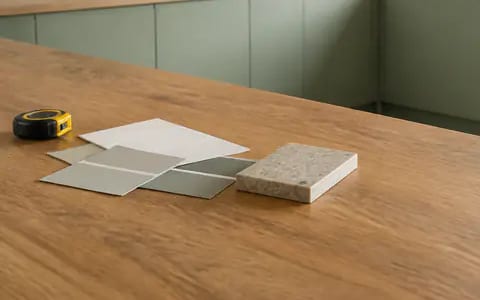
The edge of your work surface can form part of the overall kitchen design. The work surface edge can be square or, alternatively, can be a ‘bullnose’ which has a rounded front edge. In general, a bullnose work surface edge is less likely to chip than a square edge and is therefore kinder to hips etc. In addition, work surfaces come in a variety of thicknesses. Typically work surfaces are either 20mm thick or 30mm thick. A 20mm work surface is generally more contemporary in appearance whereas a 30mm work surface has a more traditional look and feel. It also reduces the likelihood of flexing/sagging.
Get Samples Into Your Own Kitchen
Of course, it’s also wise to remember that showroom lighting can make samples look better than they in fact are. To get a more realistic view of the worktop you are interested in, ask your supplier for a physical sample to be delivered to your home. Lay it out on your existing work surfaces and view it in different lights – kitchen daylight and evening lighting, for example. Also, view the sample against the colour and finish of your existing kitchen cabinets and flooring.
Kitchen Refurbishment is covered in more detail at The Kitchen Refurbishment Company.
A Note on Builders and Fitting
Also consider the way your chosen worktops will be fitted. Even the hardest wearing of work surfaces can be brought down by poor joints between different sections of work surface and also by neglecting to seal up areas around sinks. Use the Federation of Master Builders web site to get advice on finding a good builder. Get to know your rights as a consumer when hiring tradesmen and ensure that any initial written quotes are adhered to and that there are clear timescales in place should anything go wrong whilst the work is in progress.
Don’t Forget the Appliances
Worktops and appliances can also determine each other when it comes to purchasing. Using a guide for purchasing kitchen appliances will help you to select hob’s and ovens prior to creating a worktop template, to avoid costly re-work to the surface when trying to change appliances after.
Remember, whatever you choose is going to be used more than you think, so it’s got to be right for how you actually use your kitchen – not just how it looks on a Saturday morning in the showroom.

