
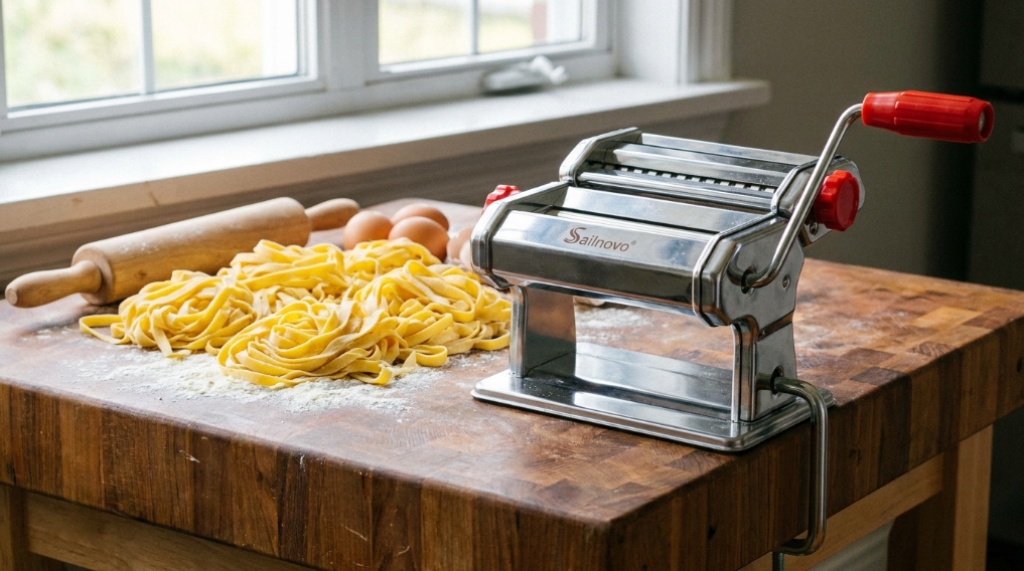
If you make fresh pasta regularly, the machine itself often becomes the biggest cost — either you spend heavily on a name-brand roller or you keep replacing cheap units that warp, crack, or seize up. A durable aluminum alloy pasta maker like the Sailnovo is designed to interrupt that cycle. Aluminum alloy is strong enough to handle daily dough without the weight and price of solid stainless steel, and the Sailnovo adds an adjustable cutter that covers several pasta shapes in one pass. This article explains what the build material actually saves you over time, where the machine works well, and where it has real limits.
Key Takeaways
- Aluminum alloy construction is the main reason the Sailnovo costs less than stainless steel machines while still holding up to regular use.
- Cost savings come from durability, not just sticker price: a machine that keeps working for years avoids repeated replacement purchases.
- The Sailnovo is best suited to home cooks making fresh pasta a few times a month, not continuous commercial use.
- Proper drying and storage matter more than the frame material for long-term performance.
- The tool costs less than many manual stainless rollers, but it still needs basic maintenance to avoid sticky dough and rust on the cutters.
What Makes Aluminum Alloy a Practical Choice
Aluminum alloy is a metal blend that stays lightweight but resists bending better than pure aluminum, which is soft. For a pasta roller, that means the body holds its shape under the pressure of repeated passes without adding the heft of a cast-iron or heavy stainless frame. The result is a machine that sits securely on the counter, clamps down firmly, and doesn’t flex when you crank tougher doughs like semolina blends.
The material choice also affects price directly. Stainless steel rollers are usually more expensive because steel costs more to source and machine. Aluminum alloy brings manufacturing cost down while keeping the frame rigid enough for home use, which is the trade the Sailnovo makes. This is the core reason a durable aluminum alloy pasta maker can undercut steel competitors without being flimsy.
Real Household Savings: Upfront vs. Long-Term
Cheap pasta rollers often fail in predictable ways: the crank mechanism loosens, the dough gets squeezed into the wrong thickness, or the frame bends out of alignment. When that happens, most people buy a replacement rather than repair it. A sturdy aluminum alloy machine avoids that cycle. Over a few years, the savings aren’t just from the purchase price — they come from not buying the same tool three times.
The savings are most obvious for someone who previously bought fresh pasta from a store or deli. Once the machine is in the kitchen, a batch of dough costs roughly the price of flour and eggs, which is usually far less than packaged fresh pasta by weight.
How the Sailnovo 2-in-1 Design Works in Practice
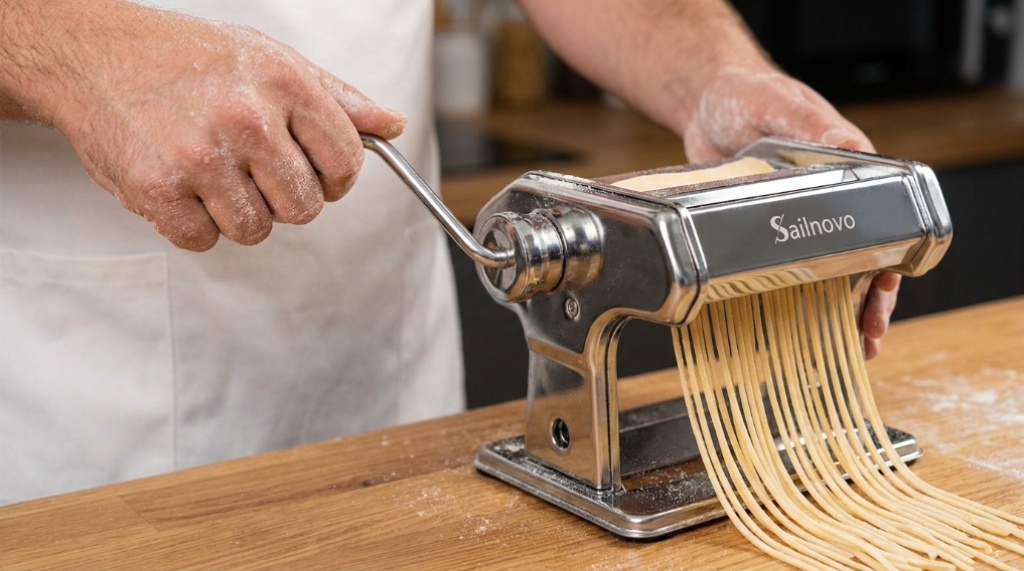
The “2-in-1” label refers to the machine combining a roller and a cutter. You feed dough through the rollers to flatten it, adjust the width setting to reach your target thickness, then pass the sheet through the cutting attachment to get noodles. Having both functions on one frame means fewer separate tools on the counter and less setup time.
Adjustable Thickness Settings
The roller usually offers a range of thickness settings, from wide sheets for lasagna down to thin strips for delicate noodles. In practice, the most useful approach is to start at the widest setting, fold and dust the dough, then step down gradually rather than jumping two settings at once. Skipping settings is the fastest way to jam the rollers or tear the sheet.
Cutting Widths
The cutter typically produces at least a couple of widths, which is what makes it useful for both fettuccine-style ribbons and thinner noodles. If you want a shape the cutter doesn’t produce — like farfalle or ravioli — you’d cut or fold the sheet by hand after rolling. That’s a reasonable limitation for the price, but it’s worth knowing before you buy.
What the Sailnovo Does Well — and Where It Doesn’t
For a home cook making pasta a few times a month, the Sailnovo covers the core tasks comfortably. It rolls and cuts, it clamps to the counter, and it stores without taking over the kitchen. It isn’t built for the demands of a restaurant kitchen or for someone making pasta daily in large volumes, where the constant cranking and stress would eventually show on any manual aluminum machine.
| Consideration | Aluminum Alloy Machine (e.g., Sailnovo) | Stainless Steel Roller |
|---|---|---|
| Upfront cost | Usually lower | Usually higher |
| Weight and handling | Lighter, easier to move | Heavier, more stable |
| Durability for home use | Good with maintenance | Very good |
| Best for | Home cooks, occasional to regular batches | Frequent users, heavier daily use |
Mistakes That Shorten the Life of an Aluminum Machine
Aluminum alloy holds up well when treated properly, but a few habits cause most of the problems:
- Washing with a full water soak. Aluminum and its alloyed parts can corrode over time. Wipe the frame and rollers with a dry or barely damp cloth instead of submerging the machine.
- Running sticky dough through without dusting. Flour the sheet and the rollers lightly. Dough that gums up the rollers forces you to clean aggressively, which wears the surface.
- Storing it wet. Any moisture left on the cutters or rollers is where rust and pitting start.
- Forcing thick dough. Adjust thickness gradually and let the rollers do the work rather than pushing dough through settings that are too narrow.
None of these are difficult, but they separate a machine that lasts a few years from one that lasts many. The same habits apply whether the frame is aluminum or steel.
Who Should Buy It — and Who Shouldn’t
The Sailnovo makes the most sense for someone who wants fresh pasta at home without a large upfront investment and doesn’t need restaurant-grade output. If you’ve been put off by the price of stainless rollers or you’re tired of replacing flimsy plastic-bodied machines, an aluminum alloy model hits a useful middle ground.
It’s a weaker fit if you plan to make large batches several times a week, want shapes beyond what the cutter produces, or prefer the heft and stability of a heavy steel machine. In those cases, paying more upfront for a stainless roller is the better long-term value, since the material suits frequent, demanding use,if you are looking for more compact options, check out affordable electric pasta makers for small kitchens.
Quick Buying Checklist
- Confirm the roller has an adjustable thickness range wide enough for both lasagna sheets and thin noodles.
- Check that the counter clamp is sturdy enough to hold the machine steady while cranking.
- Look for a cutter that produces the specific pasta shapes you’ll actually cook most often.
- Plan for storage space and a dry spot to prevent moisture damage between uses.
Frequently Asked Questions
Is aluminum alloy strong enough for a pasta maker?
Yes, for home use. Aluminum alloy is rigid enough to handle repeated rolling of standard dough, though heavy daily or commercial-level use is better served by stainless steel. The material’s main advantage is staying firm while keeping the machine lightweight and affordable.
Does an aluminum frame rust?
Aluminum itself doesn’t rust the way iron or steel does, but the cutters and any steel components can corrode if left wet. Drying the machine thoroughly after each use and storing it in a dry place prevents most of the problems.
Can I make different pasta shapes with a 2-in-1 machine?
You can make the widths the cutter supports, typically ribbon and thinner noodle styles. For shapes like ravioli or farfalle, you’d roll the sheet and shape it by hand rather than relying on the cutter.
How much money does a home pasta maker actually save?
The biggest savings come from replacing store-bought fresh pasta with homemade dough, which costs little beyond flour and eggs, and from avoiding repeated replacement of cheap machines. The upfront cost is lower than many stainless steel rollers, so the payback window is usually short for regular pasta eaters.
How often should I clean the machine?
Clean after every use, focusing on removing dough residue from the rollers and cutters. A dry brush or cloth is usually enough. Avoid soaking the machine, since moisture is the main enemy of long-term durability.
Conclusion
A durable aluminum alloy pasta maker such as the Sailnovo works because it gets the material trade-offs right for home kitchens: strong enough to last, light enough to handle, and priced low enough to beat repeated replacement purchases. The real savings come from using it consistently and caring for it properly. If you make fresh pasta occasionally or a few times a month and want a machine that rolls and cuts without a big investment, this is a sensible starting point. If you need restaurant-level output, expect to pay for stainless steel instead.


