
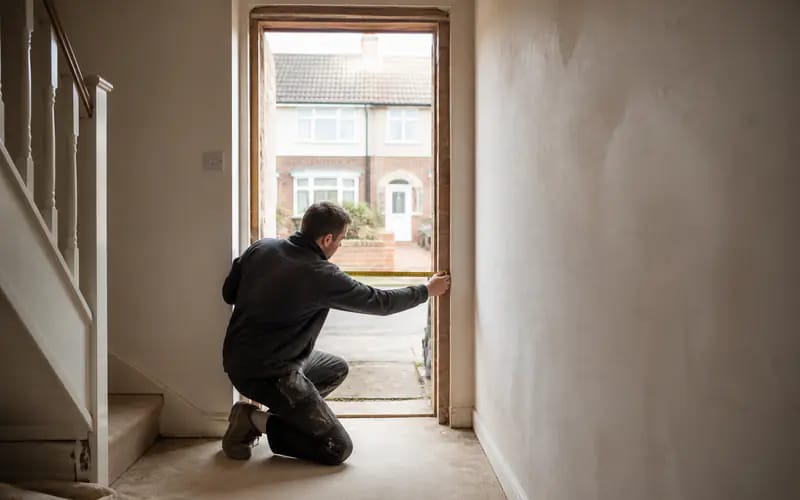
Once you have booked your new composite door, what will happen on the day of installation? It’s always helpful to know what to expect when the day arrives, how long the install will take and what to do in preparation. We have outlined the stages of installation below for your convenience.
The Survey and Measuring Visit
We would expect the installer to carry out a full survey of the space into which your new composite door will be fitted. This could be some weeks prior to the installation date for your new door and the surveyor would take measurements of the existing door opening, including the width, height and thickness of any walls as well as the depth of the door frame and any step or threshold. The surveyor would also determine how the door is to open, where the hinges and multi-point lock will be, and if there are any obvious problems with the door opening such as a dropped lintel or cracked render that will need to be addressed prior to the installation of your new composite door.
Removing the Old Door and Frame
For a single door, this part of the job should take less than an hour to remove the old door and frame. The installer will carefully ‘score’ the old frame to ensure he does not pull the plaster off the walls and then ‘lever’ it out. He will likely clear the area of any items such as coat hooks, doormats, and furniture from adjacent rooms the night before.
Checking the Opening Is Sound
With the old door and frame removed from the opening your installer will inspect the bare space to ensure that it is square and level. They will look for signs of dampness or crumbling mortar within the brick or block work of the surrounding walls and check that the lintel above the door opening is sufficient to carry the load of the brickwork above. Any minor brickwork repairs or packing of the opening can be carried out at this stage to ensure that the new door frame will fit snugly.
Fitting and Fixing the New Frame
The frame is fixed into the opening using shims to level it up. Once the frame is straight it is fixed into the jambs of the frame, into the masonry, at several points up each side. If a frame is fixed into an opening at only two or three points it can be subject to movement over time. This can cause problems with doors locking properly and can need to be re-adjusted or even re-fitted within 2 years.
Fitting the Door Slab and Hardware
The new door slab is hung on the hinges and then the multi-point locking mechanism, the letterbox, the spyhole and the handles are fitted and tested. If you have opted for a side panel, a different handle finish or for the letterbox to be positioned in a specific place then this will also be fitted and adjusted to ensure that it is flush with the rest of the door.
Sealing and Insulating the Gap

Most composite door installation companies will seal the gap between the exterior of the new door frame and surrounding exterior walls with low-expansion foam instead of using mortar to fill the gap. Exterior grade sealant is then applied to the outside of the frame, and interior sealant to the inside of the frame. This two-stage process ensures that the full perimeter of the frame is weather-tight, as mortar and foam alone cannot provide the same weather-tight seal and will crack and allow cold air to enter within a year or so of installation.
Trims, Finishing and Clearing Up
Once your door has been sealed, your installer will then add internal and external trims to cover any fixing points and to create a clean edge to your wall. He or she will also make good any disturbed plaster or render to the wall, creating a smooth finish to the area around the frame. The old door and frame, as well as any packaging or off-cuts will be removed from your property and taken away. A simple change of a single door could be completed within a half day, however installing a new porch or complex opening could require longer.
Handover and Final Checks
When the work has been completed it’s wise to check the door locks and closes properly. Also feel round the edges of the closed door for any draughts and check the bottom of the door when closed to ensure the threshold seals are working properly. You should also be given a copy of the guarantee and if the work has been done under the building regulations, a copy of the compliance certificate (FENSA notification) for the door(s) completed.
For Composite Doors Cardiff, see Choice Trade Frames.
A good installation should result in smooth locking and neat fitting into the door frame. Ideally the installer should hand over your new door with guarantee information, information about any building regulations compliance and other relevant documentation. If anything appears to be amiss on the day of the install then it is much better to bring it to the installer’s attention before they leave rather than later.


